Why Choose Aluminum Alloy Profiles?
Why Choose Aluminum Alloy Profiles? The answer begins with what a project needs: strength, manageable weight, and shapes that fit the design. Aluminum Alloy Profiles can form window frames, machine guards, equipment housings, and structural supports. Extrusion creates useful cross-sections, including channels and slots, from a single piece of material. That can reduce part count. It can also simplify assembly.
Materials scientist Michael F. Ashby writes, “Materials are the stuff of design.” His observation suits profile selection: the material and its shape work together. Aluminum alloys offer a useful balance of weight and strength, while a naturally forming oxide layer helps resist corrosion. Surface treatments can add protection or change appearance. A matte anodized frame, for example, may suit a storefront, while a bare profile may fit an indoor fixture. Details matter.
Still, aluminum is not the best answer in every case. Load, alloy, temper, wall thickness, tolerances, joining method, and exposure all affect performance. A thin profile may flex; a coating can be damaged during handling. These are easy details to overlook. This guide examines the practical advantages of Aluminum Alloy Profiles, the trade-offs behind common choices, and the questions buyers should ask before specifying a product. Better decisions start with the real conditions, not a catalog photo.
What Aluminum Alloy Profiles Are
Why Choose Aluminum Alloy Profiles?
What Aluminum Alloy Profiles Are
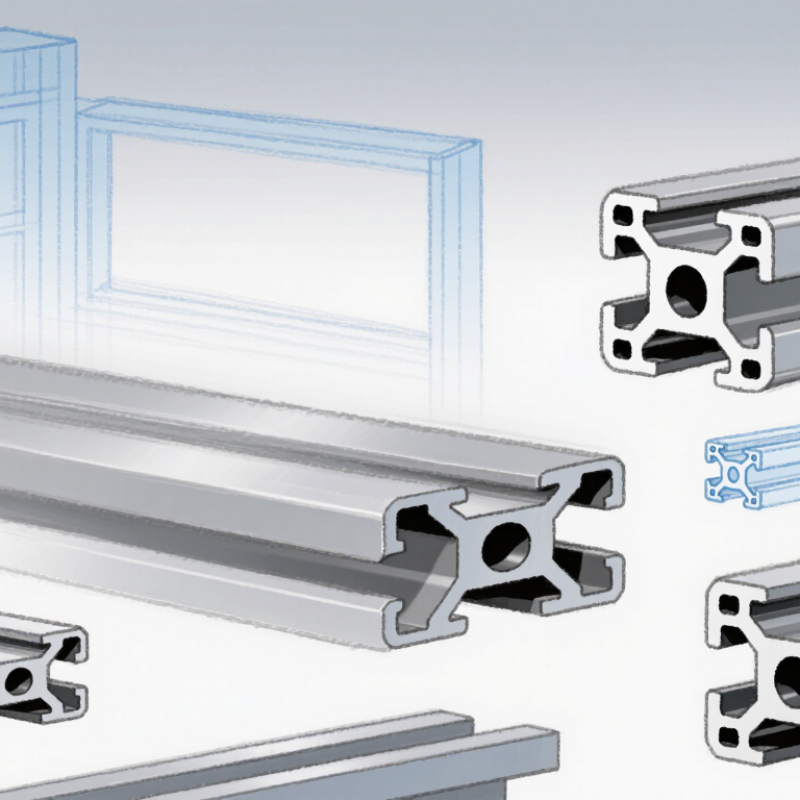
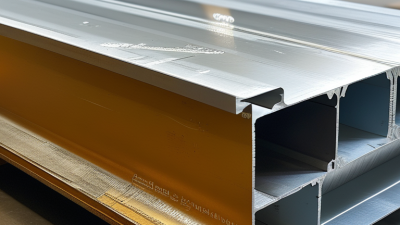
Aluminum alloy profiles are long components shaped by forcing heated alloy through a die. The die determines the cross-section, which may be a simple angle or a hollow channel with several internal ribs. Once cooled and cut to length, profiles can be machined, joined, or finished for specific applications. The material is not pure aluminum: elements such as magnesium and silicon can improve strength and formability. Alloy and temper matter. Two profiles that look alike may perform differently under load.
You can see them in window frames, machine guards, shelving, and structural assemblies. Their hollow sections can provide useful stiffness without making a component unnecessarily heavy. A cut end often reveals the design clearly: thin walls, small chambers, and grooves for fasteners. Finishes such as anodizing or powder coating may help protect the surface, though performance depends on the environment and preparation.
Details count.
A profile should be selected around its loads, span, connections, and exposure to moisture—not appearance alone. Even careful specifications can miss a practical issue: a groove that fits one fastener may complicate assembly with another. That deserves a closer look.
How Their Material Properties Shape Performance
Why Choose Aluminum Alloy Profiles? How Their Material Properties Shape Performance
Aluminum alloy profiles combine low mass with useful structural strength. The Aluminum Association gives aluminum a density of about 2.7 g/cm³, roughly one-third that of steel. That difference can reduce the weight of frames, enclosures, and moving assemblies. Less mass can mean easier handling and lower loads on supports. Small detail, real impact. But “aluminum” is not one uniform performance promise. Alloy composition and temper affect strength, formability, and corrosion behavior. A profile chosen only by its shape may disappoint under repeated loads or in wet environments. Check the grade, temper, wall thickness, and joining method against the actual duty.
Thermal behavior also shapes where profiles work well. Aluminum conducts heat readily, helping spread warmth across a heatsink or equipment housing. The same trait can transfer unwanted heat in an insulated structure, so design details matter. The International Aluminium Institute reports that recycling aluminum requires about 5% of the energy used for primary production. That is a meaningful material-cycle advantage, though it does not erase the impacts of extraction, fabrication, or transport. Profiles are also easy to cut and assemble, but thin walls can dent or distort if support is poorly planned. A useful design starts with the service conditions, not the catalog dimensions.
Why Choose Aluminum Alloy Profiles? How Their Material Properties Shape Performance
Aluminum alloy has a typical density of about 2.70 g/cm³—roughly one-third that of carbon steel. This low weight can make profiles easier to transport and handle, while properties such as strength and corrosion resistance depend on the alloy and temper selected.
Typical approximate material densities; actual values vary by composition.
Common Applications of Aluminum Alloy Profiles
Aluminum alloy profiles are used in buildings, workshops, transport equipment, and everyday products. Their low weight, corrosion resistance, and adaptable shapes make them useful where heavy components are impractical. In construction, profiles form window frames, doors, partitions, and curtain-wall supports. In factories, they create machine guards, modular workstations, and conveyor brackets. Small details matter. A well-cut channel can simplify assembly and later adjustments.
Profiles also appear in solar-panel frames, display systems, furniture, and vehicle interiors. Their shape can be tailored for specific functions, but that does not make every profile suitable for every job. A thin section may work for a light partition yet flex under equipment loads. I have seen simple installations become awkward when connectors, drainage, or access for maintenance were overlooked. The material is useful, but design still needs care.
Tips: Check the expected load, exposure to moisture, and connection method before selecting a profile. Measure twice, and test a small assembly when fit is uncertain. Leave room for maintenance; it is easy to forget.
How They Compare with Other Profile Materials
Aluminum alloy profiles weigh less than steel profiles of similar size, making them easier to lift and move on a workshop floor. Aluminum’s density is about 2.7 g/cm³, compared with roughly 7.85 g/cm³ for steel. That matters. Steel usually offers greater stiffness, though, so a long aluminum span may need deeper walls or extra supports. Profile design—not material alone—decides how much deflection you see under load.
Extruded aluminum can combine grooves, channels, and mounting surfaces in one section. That can simplify assembly compared with fabricating several steel parts. Steel may still be the better fit for compact, heavily loaded structures. Plastics resist moisture and can provide electrical insulation, but may be less rigid under sustained loads or heat. Aluminum can also corrode in some environments, especially where it contacts dissimilar metals; surface treatment and joint design matter. The International Aluminium Institute reports that recycled aluminum production uses about 5% of the energy required for primary production. That is a meaningful advantage, but it depends on recycled feedstock being available. I would not treat low weight as a free win: a thin profile can flex, and extra reinforcement can erase some of its weight savings.
Key Factors in Choosing an Aluminum Alloy Profile
Why Choose Aluminum Alloy Profiles?
Key Factors in Choosing an Aluminum Alloy Profile
Choosing an aluminum alloy profile starts with the job, not the catalog. Define the load, span, fixing method, and working environment before comparing shapes. A frame holding a light display needs different stiffness from a machine guard spanning a wide opening. Check alloy and temper together; they influence strength, formability, and machinability. A thicker wall may help, but it can add weight and cost. Trade-offs are real.
Dimensions are useful only when tolerances are clear. Review corner radii, slot widths, straightness, and cut lengths against the assembly drawing. If profiles will be anodized or painted, confirm finish requirements and visible-surface expectations early. Salt, moisture, and cleaning chemicals matter; match alloy and finish to exposure, rather than assuming aluminum never corrodes. Ask for technical data and sample pieces, then test-fit a short section. Drawings sometimes miss small conflicts.
Tips: Measure the installation space at several points. Compare load data with the actual span, not just the profile’s outer size. Check machining access and connector fit before ordering. Keep a sample for finish and fit checks. Small details matter.








 wechat
