Choosing reliable Aluminum Construction Profiles manufacturers requires more than comparing product photographs and listed prices. This guide examines ten leading companies serving construction, architecture, industrial assembly, and customized fabrication. It considers extrusion capacity, alloy selection, dimensional accuracy, surface finishing, tooling support, and delivery performance. These details matter on real projects. A profile that appears correct online may fail when it meets a tight corner, heavy glass panel, or exposed coastal environment.
The evaluation also considers manufacturing experience, quality systems, testing practices, and technical communication. Strong manufacturers should explain alloy grades, tolerances, temper conditions, and finishing options clearly. They should also provide drawings, samples, and practical installation guidance. Independent certifications can support credibility, but certificates alone do not guarantee consistent results. Factory visits, sample inspections, and production records often reveal more. Small things count, such as clean protective film, straight bundle packing, and accurate cut lengths.
This is not a permanent ranking. Market information changes. Some manufacturers disclose limited data, which makes comparison imperfect. That limitation deserves attention. Buyers should verify current capabilities, export experience, compliance requirements, and after-sales support before signing contracts. A supplier may excel at standard window profiles yet struggle with complex structural sections. Another may offer excellent customization but require longer tooling lead times. By comparing strengths, limitations, production evidence, and customer service, readers can make a more confident and practical sourcing decision. Quality begins with questions. Errors become expensive later.
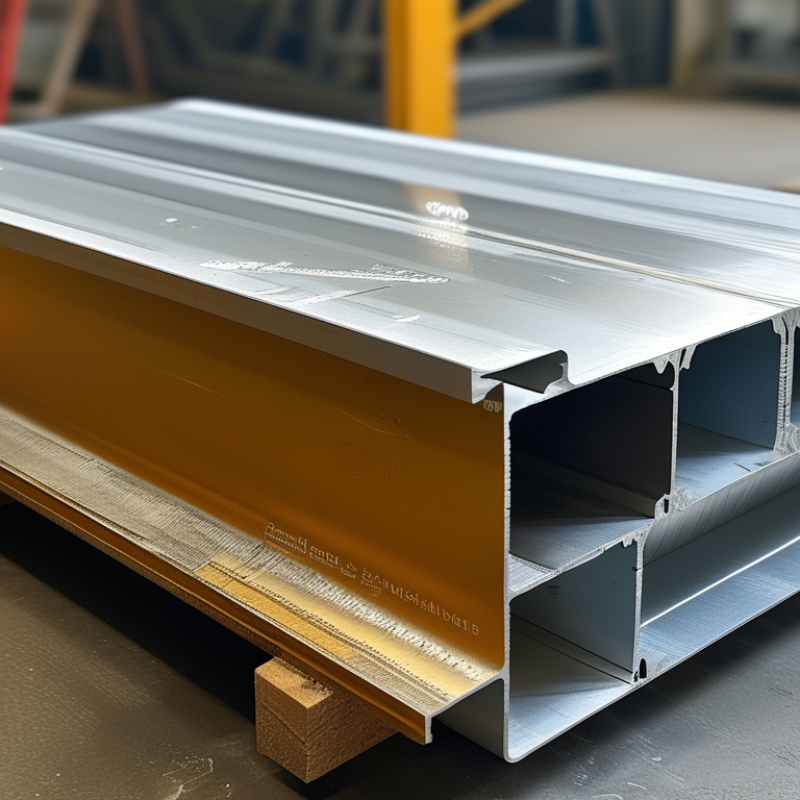
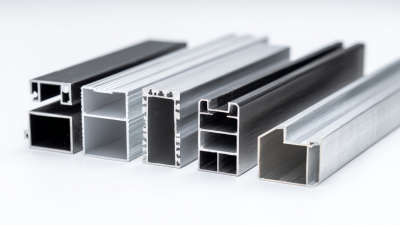
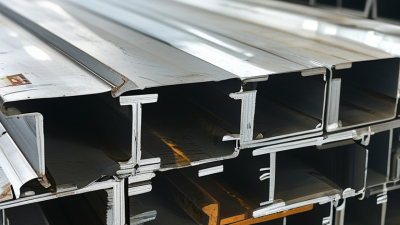
Aluminum construction profiles are engineered sections made from aluminum alloy, usually formed through an extrusion process. Heated aluminum is pushed through a shaped die, creating consistent channels, ribs, and mounting surfaces. These profiles can build frames, partitions, machine guards, platforms, display structures, and lightweight architectural systems.
Their usefulness comes from a practical balance. Aluminum is relatively light, resists ordinary corrosion, and can be cut or drilled with common workshop equipment. T-slots and internal channels allow brackets, panels, fasteners, and hinges to connect without extensive welding. Different wall thicknesses and cross-sections provide different levels of strength. A larger profile is not automatically better. Load direction, span length, vibration, and connection quality matter more than appearance.
In real projects, accurate measurements prevent costly adjustments. I have seen frames fail to align because installers ignored small profile tolerances. That mistake was avoidable. Engineers should check alloy grade, surface finish, allowable load, and joining methods before selecting a supplier.
Outdoor structures may need extra attention to drainage, galvanic corrosion, and protective coatings. Profiles also conduct heat, which can become a weakness in insulated assemblies. The specification may look complete, yet fasteners and corner joints often deserve deeper review.
Reliable manufacturers should provide dimensional data, mechanical properties, inspection records, and clear packaging standards. Small documentation gaps can create large installation problems.

Aluminum construction profiles begin with billet preparation, not extrusion. Alumina is smelted into aluminum, then alloying elements adjust strength, ductility, and corrosion resistance. The USGS Mineral Commodity Summaries 2024 recorded roughly 70 million metric tons of global primary aluminum production in 2023. This scale makes process control essential.
Manufacturers heat billets near the alloy’s extrusion range, often around 450–500°C. A hydraulic press then pushes softened metal through a precision die. The emerging profile may cool rapidly, stretch for straightness, and undergo artificial aging. Cutting follows, often with computer-controlled saws. Surface treatments include anodizing or powder coating, depending on exposure and appearance requirements. Quality teams inspect wall thickness, dimensions, surface defects, and alloy chemistry. EN 755 and EN 12020 provide useful dimensional and tolerance references for many extruded profiles. Yet no factory is flawless. Die wear, uneven cooling, and small handling marks can still create rejects.
Tips: Ask for the alloy grade, temper designation, and inspection records. Check whether tolerances match the project drawings. The International Aluminium Institute reports that recycling aluminum uses about 5% of the energy required for primary production. Therefore, manufacturers should track recycled content and furnace efficiency, not only output volume. A recycled billet can reduce impact, but contamination and inconsistent chemistry require careful sorting. That detail is easy to overlook.
Ranking the top 10 aluminum construction profile manufacturers requires more than comparing annual sales. Production scale matters, but it cannot replace verified quality. The International Aluminium Institute reported global primary aluminum production of about 70.6 million tonnes in 2023. This figure shows the industry’s scale, not a manufacturer’s reliability. A credible ranking should examine extrusion capacity, alloy selection, profile size, dimensional tolerances, and documented defect rates. Factory audits and recent customer references add practical evidence.
Sustainability must also carry measurable weight. The International Aluminium Institute identifies energy use and greenhouse-gas emissions as major priorities across aluminum production. Therefore, rankings should assess recycled content, energy intensity, environmental product declarations, and traceable material records. ISO 9001 quality systems and ISO 14001 environmental systems can support evaluation, but certificates alone prove little. Site performance matters more.
Delivery performance deserves equal attention. Review average lead times, tooling control, packaging quality, and the ability to maintain stable batches. Construction projects often fail at small details, such as warped profiles or missing certificates. No ranking is flawless. Data may be incomplete, and manufacturers can improve quickly. A transparent scoring model should disclose its weighting, evidence date, and limitations, while separating verified performance from marketing claims. As a practical guide, quality and traceability should outweigh the lowest quoted price.
Top 10 Aluminum Construction Profile Manufacturers
The top 10 aluminum construction profile manufacturers should be judged beyond production volume. Buyers need evidence of alloy consistency, dimensional tolerance, surface durability, and delivery reliability. The International Aluminium Institute identifies building and construction as one of aluminum’s largest end-use sectors, representing roughly one-quarter of demand. This supports continued investment in window frames, curtain walls, solar structures, and modular systems.
A reliable ranking should examine extrusion capacity, recycling practices, testing systems, and project experience. The World Bank’s commodity outlook shows aluminum prices remain sensitive to energy costs and supply disruptions. Manufacturers with documented energy management can therefore offer more predictable pricing. Certification matters too. ISO 9001 supports process control, while ISO 14001 indicates structured environmental management. These documents do not guarantee perfect performance. They only create a traceable baseline.
Practical details often reveal more than polished brochures. Check whether profiles arrive with protective film, clear batch codes, and straight cut ends. Ask for mill certificates and independent coating tests. A few suppliers may publish impressive capacity figures but provide limited evidence on rejection rates. That is a weakness. Regional rankings can also be imperfect because production data are not always comparable. Still, comparing tolerance control, recycled content, lead times, and after-sales engineering gives specifiers a more dependable view of the leading manufacturers.
This chart compares representative minimum yield-strength benchmarks for commonly used aluminum extrusion alloys and tempers in construction profiles. Values are shown in MPa and reflect typical 1–5 mm wall-thickness conditions referenced in EN 755-2 and ASTM B221.
Higher yield strength generally supports greater structural loading capacity, while final profile performance also depends on geometry, wall thickness, surface treatment, joining method, and design requirements.
Top 10 Aluminum Construction Profiles Manufacturers
Aluminum construction profiles serve many purposes, from window frames and curtain walls to machine guards and modular workstations. Their low weight simplifies handling, while adequate stiffness supports practical structural designs. In coastal buildings, corrosion-resistant alloys and durable surface treatments deserve close attention. Indoor factory systems may need less protection but higher dimensional accuracy. A profile that looks suitable on paper can still fail during installation.
Selection starts with the expected load, span, joint method, and working environment. Engineers should check alloy grade, temper, wall thickness, and profile tolerances. A hollow section may reduce weight, yet its connection points can require reinforced inserts. For thermal systems, consider conductivity and expansion. A dark exterior frame can become noticeably warmer under direct sunlight. Allow movement where long sections meet fixed walls. Small oversights matter.
Application details should guide the manufacturer evaluation. Ask for technical drawings, mechanical data, coating specifications, test records, and traceable batch information. Reliable suppliers should explain cutting limits, minimum order quantities, packaging, and replacement procedures. Samples are useful, but one short sample cannot reveal every production risk. We once selected a neat-looking profile before checking the fastener channel depth; installation then required extra spacers. That mistake was avoidable. Delivery consistency, communication, and quality control often matter as much as the catalog range.
| Rank | Anonymous Manufacturer Profile | Typical Production Strength | Common Alloy Series | Primary Applications | Relevant Standards or Certifications | Key Selection Factor |
|---|---|---|---|---|---|---|
| 1 | Profile A: High-Capacity Extrusion Specialist | Large structural profiles, complex dies, long-length extrusion, and high-volume production | 6061, 6063, 6082; T5 and T6 tempers | Curtain walls, industrial frames, solar mounting systems, transportation structures | ISO 9001 quality management; EN 755 dimensional and mechanical requirements | Press capacity, dimensional control, and die-making capability |
| 2 | Profile B: Architectural Systems Manufacturer | Precision architectural profiles, thermal-break systems, and integrated doors and windows | 6063 and 6060; T5 and T6 tempers | Windows, doors, façades, partitions, balconies, and interior fit-outs | EN 12020; EN 755; ISO 9001; architectural coating specifications | Surface appearance, thermal performance, and system compatibility |
| 3 | Profile C: Industrial Fabrication Specialist | Heavy-duty profiles, tight tolerances, CNC machining, drilling, tapping, and cut-to-length services | 6061-T6, 6082-T6, 6005A-T6 | Machine guards, automation equipment, heat sinks, workstations, and industrial enclosures | ISO 9001; EN 755; ASTM B221 for extruded aluminum products | Mechanical strength, machining accuracy, and secondary processing |
| 4 | Profile D: Solar Mounting Profile Manufacturer | Standardized rails, brackets, clamps, and corrosion-resistant profiles for photovoltaic installations | 6005A-T6, 6063-T6, 6061-T6 | Rooftop solar, ground-mounted solar, carports, and photovoltaic tracking structures | ISO 9001; EN 755; structural design verification to applicable building codes | Load rating, corrosion resistance, installation speed, and system compatibility |
| 5 | Profile E: Precision Heat-Sink Manufacturer | High-fin-density extrusion, skived or machined heat sinks, and thermal interface preparation | 6063-T5, 6063-T6, 6061-T6 | LED lighting, power electronics, telecommunications, battery systems, and control cabinets | ASTM B221; ISO 9001; thermal performance testing based on project requirements | Thermal conductivity, fin geometry, contact flatness, and allowable temperature rise |
| 6 | Profile F: Transportation Profile Manufacturer | Large hollow profiles, welded assemblies, lightweight structural components, and custom sections | 6061-T6, 6082-T6, 6005A-T6 | Rail vehicles, commercial vehicles, electric buses, trailers, and marine structures | EN 755; EN 15085 for applicable rail-welding processes; ISO 9001 | Strength-to-weight ratio, weldability, fatigue performance, and traceability |
| 7 | Profile G: Modular Framing System Manufacturer | T-slot profiles, modular connectors, standardized accessories, and rapid assembly systems | 6063-T5 and 6063-T6 | Workbenches, machine bases, production lines, safety guarding, and laboratory equipment | ISO 9001; profile dimensional specifications; project-specific load testing | Slot compatibility, connector availability, modularity, and assembly time |
| 8 | Profile H: Surface-Finishing Specialist | Extrusion combined with anodizing, powder coating, polishing, brushing, and color matching | 6060, 6063, 6005A | Decorative façades, retail interiors, furniture, lighting, handrails, and premium architectural products | ISO 9001; Qualanod or Qualicoat requirements where applicable | Coating thickness, color consistency, weather resistance, and surface preparation |
| 9 | Profile I: Custom Small-Batch Manufacturer | Low-to-medium volume orders, rapid prototyping, custom dies, and engineering support | 6063, 6061, 6005A, and 6082 depending on design requirements | Prototype equipment, specialty enclosures, custom furniture, robotics, and product development | ISO 9001 where certified; EN 755 or ASTM B221 according to the purchase specification | Minimum order quantity, tooling cost, lead time, and engineering flexibility |
| 10 | Profile J: Sustainable Recycled-Aluminum Manufacturer | Primary and recycled billet management, material traceability, extrusion, and environmental reporting | 6063, 6060, 6005A, and 6061 | Green building projects, low-carbon façades, solar frames, windows, doors, and industrial components | ISO 9001; ISO 14001; EN 15804 environmental product declarations where available | Recycled content, carbon footprint, material certification, and supply-chain transparency |
Note: Alloy selection, temper, dimensional tolerances, coating class, and applicable certifications should be verified against the project specification and the manufacturer’s current technical documentation.