China Top 10 Aluminum Profile Suppliers for Global Buyers
Choosing among China’s leading aluminum suppliers is not a simple price comparison. Aluminum Profiles vary in alloy, temper, dimensions, surface finish, and manufacturing consistency. A polished sample may look convincing, yet the production batch must match its specifications. Details matter.
Metallurgist John E. Hatch’s published work highlights how alloy and processing affect aluminum’s properties. A practical sourcing principle, consistent with that work, is: “Match the alloy and temper to the service conditions, not just the purchase price.” This is a concise paraphrase, not a verbatim quotation. Buyers should also check extrusion capacity, inspection procedures, packaging, and the supplier’s experience with comparable projects. Ask for technical documents and clear tolerances. Then compare them.
This guide examines ten Chinese suppliers for global buyers, focusing on capabilities and practical evaluation criteria rather than unsupported promises. Rankings can hide important trade-offs. A large factory may offer broad capacity, while a smaller specialist may provide closer engineering support. Neither is automatically the better choice. Consider your profile design, expected order volume, finish requirements, delivery schedule, and communication needs. Request representative samples when appropriate, and confirm how quality issues are documented and resolved. One caveat remains: public supplier information may not reveal everyday production performance. Independent verification is still worthwhile. The aim is a more informed shortlist, not a shortcut around due diligence.
Understanding Aluminum Profiles and Their Uses
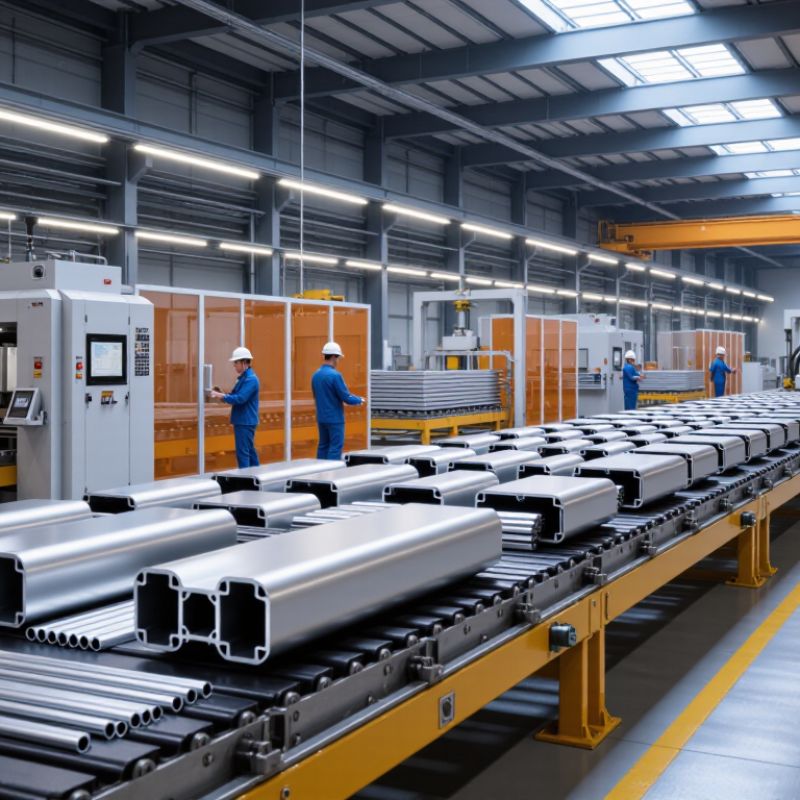
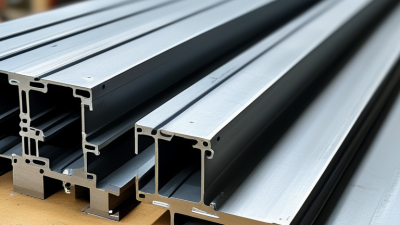
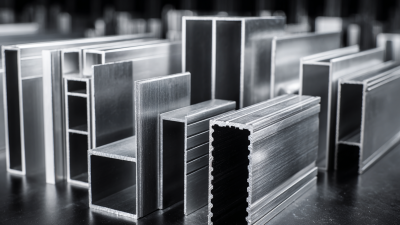
An aluminum profile is a shaped section made by pushing heated aluminum through a die.
This process creates repeatable forms, from narrow window frames to slotted rails and sturdy beams. The shape can provide strength without making every part solid. Alloy and temper matter: they influence strength, corrosion resistance, and how easily a section can be machined. A profile that looks suitable may still flex too much under load.
Profiles appear in building facades, doors, vehicle structures, equipment frames, and solar-panel supports. The International Aluminium Institute’s 2021 report, Aluminium: The Path to a Sustainable Future, projected global aluminum demand could rise from
86.2 million tonnes in 2020 to 119.5 million tonnes by 2030.
This is an industry-wide forecast, not a profile-only figure, but it signals expanding demand across many applications. For buyers, the intended load, exposure, joining method, and required tolerances should guide specification. Small details matter.
Tips: Ask for a section drawing and alloy-temper details. Check wall thickness at corners, not just the outer dimensions. If possible, test a sample under real operating conditions; catalog data cannot capture every installation.
How China’s Aluminum Profile Industry Serves Global Markets
China Top 10 Aluminum Profile Suppliers for Global Buyers
How China’s Aluminum Profile Industry Serves Global Markets
China’s aluminum profile industry supports construction, transport, solar equipment, and industrial machinery markets. The U.S. Geological Survey’s Mineral Commodity Summaries 2025 estimates China produced 43 million metric tons of primary aluminum in 2024, out of 72 million worldwide. This indicates substantial upstream capacity, but it is not a measure of profile output. Billet supply is only one factor; alloy choice, extrusion capability, heat treatment, and surface finishing also shape a supplier’s ability to meet an order.
For global buyers, service often comes down to practical details: section drawings, dimensional tolerances, temper, finish, and packaging for long-distance transport. A six-meter profile may need protective wrapping to prevent surface marks, while a tight tolerance can require tooling adjustments and sample approval. Supplier brochures can make a custom section look routine. It may not be. UN Comtrade classifies aluminum bars, rods, and profiles under HS 7604, allowing buyers to review trade flows alongside quotations. Compare those records cautiously: customs data does not show product consistency, delivery reliability, or inspection results. Ask for documented test methods and confirm specifications before production.
Criteria for Selecting Reliable Chinese Aluminum Profile Suppliers
Selecting a Chinese aluminum profile supplier starts with a clear specification, not a polished catalogue. Define the alloy, temper, cross-section, finish, and dimensional tolerances your project needs. A profile for a sliding door may require different strength and surface consistency from one used inside a machine. Small differences matter.
Ask for material certificates, inspection records, and samples made with the proposed tooling. Compare sample dimensions against your drawings, and check corners, wall thickness, and finish under consistent lighting. Request details on how the supplier controls extrusion temperature and detects defects. A neat sample is useful, but it does not prove that every production batch will match. Ask how nonconforming pieces are recorded and handled. Details matter.
Reliable communication is part of quality control. Send a marked-up drawing and note how revisions will be approved before production begins. Confirm minimum order quantities, lead times, packaging, and shipping arrangements in writing. If answers stay vague, pause and ask again. Video calls or factory audits can help clarify processes, though neither replaces documented checks. No checklist catches everything; even experienced buyers can overlook a packaging detail until profiles arrive scratched or bent.
How to Verify Suppliers and Manage the Sourcing Process
For global buyers comparing aluminum profile suppliers, verification should begin with the actual production process, not a polished catalog. Request current certificates and confirm their issuing organization, product scope, and validity. Ask whether the supplier controls extrusion, aging, machining, and surface finishing in-house or uses subcontractors. The answer can affect consistency and lead time. Ask for evidence.
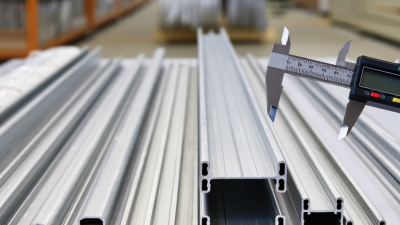
Share a technical drawing and specify alloy, temper, dimensions, tolerances, finish, and packaging. Then compare the supplier’s written response against your requirements. A sample should be measured at several points, not judged by appearance alone. Check surface uniformity, corner details, and fit with adjoining parts. Keep the approved sample and inspection record for later comparison. Small details matter.
Before placing a larger order, discuss production capacity, minimum quantities, payment milestones, shipping terms, and how defects are handled. Request recent inspection records and arrange an independent pre-shipment check when the order justifies it. Confirm that packaging protects long profiles from rubbing, moisture, and bending during transit. No checklist catches everything. Even a careful process can miss a weak assumption, such as treating a sample as proof of every production batch. Record open questions, assign owners, and agree on inspection points before production starts.
Aluminum Profile Supplier Verification: Minimum Tensile Strength Benchmarks
Compare the alloy and temper stated in a supplier’s quotation and mill test certificate with the applicable ASTM B221/B221M requirements and your purchase specification. These benchmark minimums are not a substitute for checking the exact product form and specification.






 wechat