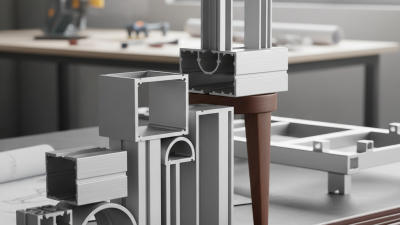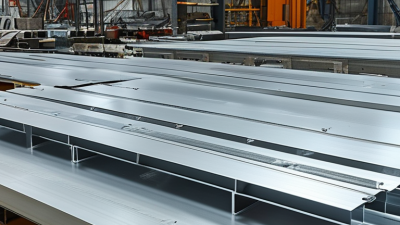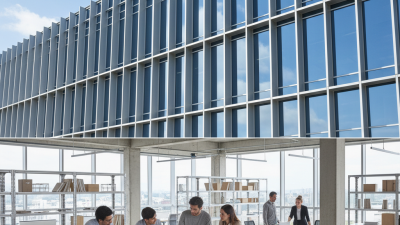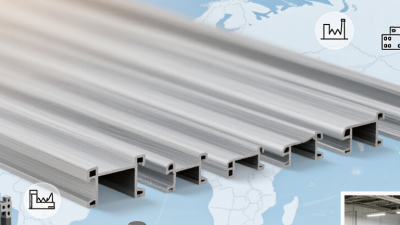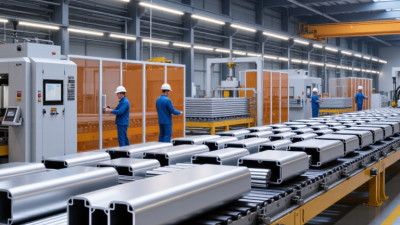
Extruded Aluminum Profiles appear in more places than many buyers realize. They form window frames, curtain walls, doors, railings, and lightweight partitions. In factories, they support machine guards, conveyor systems, workbenches, and modular assembly stations. A technician may cut a six-meter section into shorter lengths, drill mounting holes, and connect it with T-nuts. The result is clean, adjustable, and relatively easy to maintain.
Their uses also extend to solar panel frames, LED housings, heat sinks, vehicle components, and office furniture. Aluminum offers useful strength with lower weight than many steels. It also resists corrosion when the alloy, finish, and environment are properly matched. Anodizing can create a durable surface, while powder coating provides broader color choices. However, these profiles are not automatically suitable for every load or climate. A catalog drawing cannot replace calculations, testing, or professional review.
This guide examines how manufacturers and engineers select Extruded Aluminum Profiles for practical applications. It considers alloy grades, temper conditions, wall thickness, profile geometry, tolerances, joining methods, and surface treatments. These details influence stiffness, appearance, cost, and service life. A narrow profile may look elegant but flex under vibration. A thicker design may perform better, yet increase material use and machining time. Real projects often involve compromises. That is worth remembering. Reliable selection depends on verified specifications, supplier quality records, installation conditions, and the advice of qualified professionals.
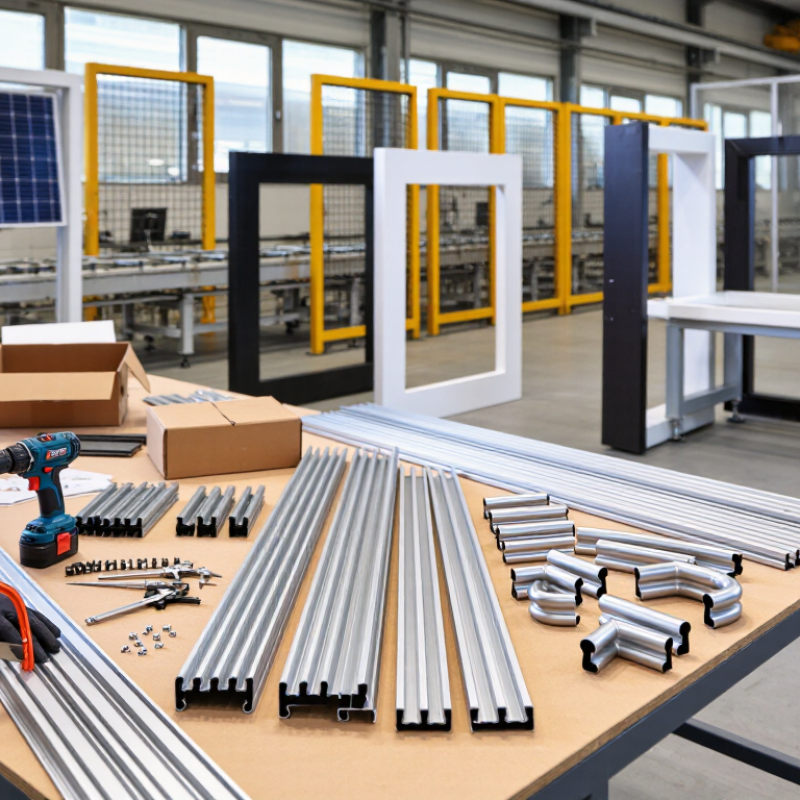
Extruded aluminum profiles are shaped components made by forcing heated aluminum billets through a precision die. The process creates continuous sections with consistent dimensions, such as channels, tubes, angles, and custom frames.
These profiles are lightweight, corrosion resistant, and easy to machine. Their hollow shapes can reduce material use while preserving useful stiffness. The U.S. Geological Survey’s Mineral Commodity Summaries 2025 estimates global primary aluminum production reached about 72 million metric tons in 2024. This scale supports aluminum’s broad industrial availability. The International Aluminium Institute also reports that nearly 75% of all aluminum produced remains in use today, reflecting its long service life and recycling value.
Extruded profiles appear in window frames, curtain walls, solar panel rails, machine guards, heat sinks, and transport structures. A workshop may cut a six-meter section into short frame members, drill mounting holes, and join them with bolts. Thermal breaks can improve building performance. Anodizing or powder coating can add surface protection and color.
Designers should not treat every profile as automatically strong. Wall thickness, alloy, support spacing, and connection design matter. A thin channel may twist under uneven loading. That detail is easy to miss. Real projects also need dimensional checks, corrosion considerations, and manufacturing tolerances. Industry experience shows that a practical profile often balances strength, weight, cost, and assembly speed rather than maximizing only one feature.
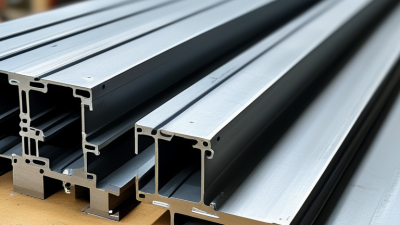
Aluminum extrusion profiles begin as cylindrical billets, usually heated to about 400–500°C. The exact temperature depends on the alloy, billet size, and required strength. A hydraulic ram pushes the softened billet through a steel die with a shaped opening. The opening determines the profile’s cross-section, including channels, ribs, and hollow sections. It is similar to pressing clay, but the pressure and heat require precise control. The process looks simple.
After leaving the die, the hot profile moves along a runout table. Fans or water sprays cool it, while operators monitor straightness and surface condition. A stretching machine then removes mild twisting and internal stress. The profile is cut into specified lengths, often with a saw that leaves clean, square ends. Heat treatment can improve hardness and dimensional stability. Some profiles receive anodizing, powder coating, or another protective finish. These steps matter when the material will face moisture, friction, or frequent handling.
Extrusion is widely used for window frames, machine guards, lighting housings, rails, and lightweight structural assemblies. Designers often choose it because one profile can combine strength, low weight, and built-in mounting channels. Still, every design involves trade-offs. A thin wall may reduce weight but can deform during cooling or cutting. A complicated die may also raise costs and increase adjustment time. In real production, the first trial is rarely perfect. Engineers inspect measurements, review defects, and refine the die before approving regular output.
Extruded aluminum profiles support applications where low weight, strength, and precise dimensions matter. Their key properties begin with an excellent strength-to-weight ratio. This helps reduce structural load in frames, guards, workstations, and transport equipment. Aluminum also resists surface corrosion in humid environments. However, protection can weaken near harsh chemicals or trapped moisture.
The extrusion process creates consistent shapes with channels, ribs, and mounting surfaces. These details simplify assembly and allow fast adjustments during maintenance.
Profiles are common in machine frames, solar panel supports, LED housings, conveyor structures, office partitions, and lightweight enclosures.
Their thermal conductivity helps move heat away from electronic or lighting components. Electrical conductivity also supports selected grounding and heat-transfer designs, when engineers verify the full system. Reusable profiles can reduce cutting waste, although poor planning still creates unnecessary scrap.
Tips: Choose the profile by load, span, joint type, and environment. Check deflection, not only breaking strength. Keep fasteners compatible with aluminum to limit galvanic corrosion. Leave room for cables and tools. Small oversights matter. A clean-looking frame may still vibrate, flex, or collect water at its joints. Practical testing remains valuable, especially when temperature changes, repeated movement, or uneven loads affect performance.
Extruded aluminum profiles serve many industries because they combine low weight, repeatable dimensions, and flexible design. During extrusion, a heated billet passes through a shaped die, producing channels, ribs, and hollow sections. These features support window frames, curtain walls, doors, and modular partitions. The International Aluminium Institute’s sector data places buildings and construction at roughly one-quarter of global aluminium use. Profiles often receive anodizing or powder coating, while thermal breaks improve window insulation. On a jobsite, installers value light sections that accept accurate fasteners.
Manufacturing and automation rely on profiles for machine guards, conveyor frames, workstations, and sensor mounts. Engineers can cut and reconfigure these systems without welding every joint. Heat sinks and electrical enclosures use aluminium’s conductivity and corrosion resistance. In transport, extrusions appear in rail interiors, truck bodies, roof rails, and battery-tray structures. The U.S. Department of Energy reports that a 10% vehicle weight reduction may improve fuel economy by 6–8%. That figure is a design guide, not a guarantee.
Solar racking, lighting channels, furniture, and medical equipment create further demand. Designers balance section weight, stiffness, tolerances, surface finish, and joining costs. A thicker wall is not automatically safer. Poor drainage can undermine a well-finished profile. In practical fabrication, assembly is often overlooked: connectors, gaskets, and fasteners may not match. Better specifications should state loads, environments, tolerances, and inspection methods before production begins. Some applications still suit steel, composites, or cast parts better.
| Industry | Typical Applications | Common Profile Forms | Why Extruded Aluminum Is Used | Key Design Considerations | Common Surface Treatments |
|---|---|---|---|---|---|
| Construction and Architecture | Window and door frames, curtain-wall components, partitions, handrails, sunshades, and façade framing. | Hollow frames Channels Angles T-sections | Light weight, corrosion resistance, dimensional accuracy, and the ability to create complex hollow sections in one extrusion. | Thermal breaks, drainage paths, air and water sealing, wind-load resistance, and connection details. | Powder coating, anodizing, and liquid paint systems. |
| Transportation | Automotive crash-management parts, roof rails, seat structures, vehicle frames, rail-car interiors, and trailer components. | Box sections Beams Ribs Structural channels | Low density helps reduce vehicle mass, while aluminum provides useful strength-to-weight performance and corrosion resistance. | Alloy and temper selection, fatigue performance, crash requirements, joining method, and dimensional tolerances. | Anodizing, powder coating, mill finish, or protective conversion coatings. |
| Solar Energy | Photovoltaic module frames, mounting rails, support structures, inverter housings, and adjustable brackets. | Rails C-channels Clamps T-slots | Low weight simplifies installation, and corrosion resistance supports long-term outdoor exposure. | Wind and snow loads, galvanic compatibility with fasteners, drainage, thermal expansion, and installation speed. | Anodizing or durable powder coating for outdoor environments. |
| Electronics and Electrical Equipment | Electronic enclosures, instrument cases, control cabinets, heat sinks, mounting rails, and cable-management systems. | Heat-sink fins Enclosures DIN-style rails Mounting channels | Aluminum conducts heat efficiently, is non-magnetic, and can be shaped to combine structural and thermal-management functions. | Heat-dissipation area, electrical isolation, shielding requirements, wall thickness, and access for assembly. | Clear anodizing, colored anodizing, powder coating, or chemical conversion treatment. |
| Industrial Machinery and Automation | Machine guarding, workstations, conveyor frames, robot-cell structures, linear-motion assemblies, and modular production fixtures. | T-slot profiles Square tubes Base plates Corner sections | Profiles are easy to cut, drill, fasten, and reconfigure, making them suitable for modular equipment construction. | Load capacity, vibration control, joint stiffness, repeatable tolerances, and compatibility with standard fasteners. | Natural anodizing, hard anodizing, or powder coating. |
| HVAC and Thermal Management | Heat sinks, evaporator and condenser components, air-handling frames, duct supports, and equipment housings. | Finned sections Flanged channels Frames Cooling plates | Good thermal conductivity, low mass, and the ability to produce large surface areas or integrated cooling channels. | Airflow, fin geometry, contact resistance, thermal cycling, corrosion exposure, and cleanability. | Mill finish, anodizing, or protective coating selected for the operating environment. |
| Aerospace and Aviation | Cabin fittings, seat tracks, interior frames, floor structures, access panels, and lightweight equipment supports. | Channels Angles Stringers Thin-wall sections | High strength-to-weight potential and design flexibility help support lightweight structural and interior applications. | Certified material properties, fatigue and damage tolerance, tight tolerances, joining processes, and fire-performance requirements. | Anodizing, conversion coating, or approved aerospace finishing systems. |
| Marine and Offshore Equipment | Deck railings, gangways, ladders, boat frames, equipment supports, and lightweight marine structures. | Round tubes Handrail profiles Channels Frames | Low density and natural oxide protection make aluminum useful where weight reduction and corrosion resistance are important. | Saltwater exposure, crevice corrosion, galvanic isolation, weldability, drainage, and maintenance access. | Anodizing, marine-grade paint systems, or powder coating suitable for exposure conditions. |
| Furniture and Interior Design | Table frames, shelving systems, office partitions, cabinet components, display structures, and lighting fixtures. | Square tubes Round tubes T-slots Decorative trims | Light weight, clean appearance, ease of machining, and the availability of decorative finishes support both functional and visual design goals. | Surface appearance, corner quality, joint design, scratch resistance, and ergonomic dimensions. | Brushed finish, anodizing, powder coating, polishing, or wood-look finishing. |
| Lighting and LED Systems | LED heat sinks, linear lighting housings, recessed channels, reflectors, track-lighting components, and mounting profiles. | Finned heat sinks Linear channels Reflector sections Mounting rails | Aluminum transfers heat away from LEDs and can be extruded into long, precise profiles for continuous lighting systems. | Thermal resistance, LED strip fit, diffuser retention, optical finish, electrical insulation, and installation method. | Anodizing, powder coating, polished finish, or reflective surface treatment. |
| Medical and Laboratory Equipment | Equipment frames, instrument housings, mobile carts, workstations, monitor arms, and cleanroom support structures. | Enclosures Tubing Channels Modular frames | Light weight, cleanable surfaces, corrosion resistance, and precise profiles support hygienic and configurable equipment designs. | Surface cleanliness, chemical resistance, rounded edges, sterilization compatibility, and ease of disassembly. | Anodizing, powder coating, or other application-specific hygienic finishes. |
| Retail and Commercial Displays | Sign frames, shelving, exhibition booths, product displays, banner structures, and modular kiosks. | Display frames Snap-fit channels T-slot profiles Trim sections | Profiles provide a lightweight, reusable, and visually consistent framework that can be assembled with limited tooling. | Fast assembly, portability, load distribution, appearance, replaceable panels, and compatibility with inserts or covers. | Anodizing, powder coating, polishing, or decorative laminations. |
Extruded aluminum profiles appear in machine frames, lighting channels, window systems, solar supports, and warehouse fixtures. They are formed by pushing heated aluminum through a shaped die. This process creates consistent sections with useful grooves, ribs, or hollow chambers. Designers often choose them because they are lightweight, corrosion resistant, and easy to cut or assemble.
The correct profile depends on load, span, connection method, and surroundings. A narrow section may suit a protective cover but fail under vibration. Check bending strength, wall thickness, and unsupported length before ordering. Also consider whether the profile needs drilling, tapping, anodizing, or powder coating. These details affect cost and installation time. Measure twice.
Environmental conditions matter just as much. Outdoor structures may face moisture, salt, dust, and temperature changes. A suitable alloy and surface treatment can improve service life. For food or clean manufacturing areas, smooth surfaces reduce places where dirt can collect. Thermal expansion also deserves attention, especially in long rails or frames exposed to sunlight.
In practical projects, the strongest profile is not always the best choice. It may add unnecessary weight and complicate assembly. One overlooked issue is access to fasteners after installation. A profile can meet calculations yet frustrate maintenance workers. Review the complete assembly, not only the cross-section. If requirements are uncertain, test a short sample under realistic load conditions. The first selection may still need revision.