How to Choose the Right Aluminum Extrusion Supplier?
Choosing the right Aluminum Extrusion supplier can shape your product’s cost, strength, appearance, and delivery schedule. It is not simply a price comparison. A supplier must understand your alloy, temper, profile dimensions, surface finish, and expected application.
In practice, experienced buyers examine more than polished websites. Ask about die design, dimensional tolerances, minimum order quantities, and realistic production lead times. Details matter. Request recent inspection reports, material certificates, and clear evidence of batch traceability. A reliable supplier should explain how it controls straightness, wall thickness, hardness, and anodizing quality. Sample profiles can reveal scratches, uneven coloring, or difficult assembly issues before they reach mass production.
Technical capability deserves careful attention. Confirm whether the supplier owns suitable extrusion presses, cutting equipment, CNC machines, and finishing lines. Review its experience with similar profiles, especially if your design includes thin walls, deep channels, or tight tolerances. Independent certifications may support credibility, but certificates alone do not guarantee consistent results. Ask for customer references or a controlled trial order.
Cost still matters, but the lowest quotation may hide packaging weaknesses, unstable lead times, or expensive rework. Look at total value instead. Compare tooling fees, freight terms, inspection procedures, communication speed, and after-sales support. A supplier may perform well on one project and struggle on another. That possibility deserves honest consideration. The strongest choice is usually a transparent partner that identifies risks early, documents its process, and improves when something goes wrong. Ask directly. Fit matters.
Define Your Project Requirements and Extrusion Specifications
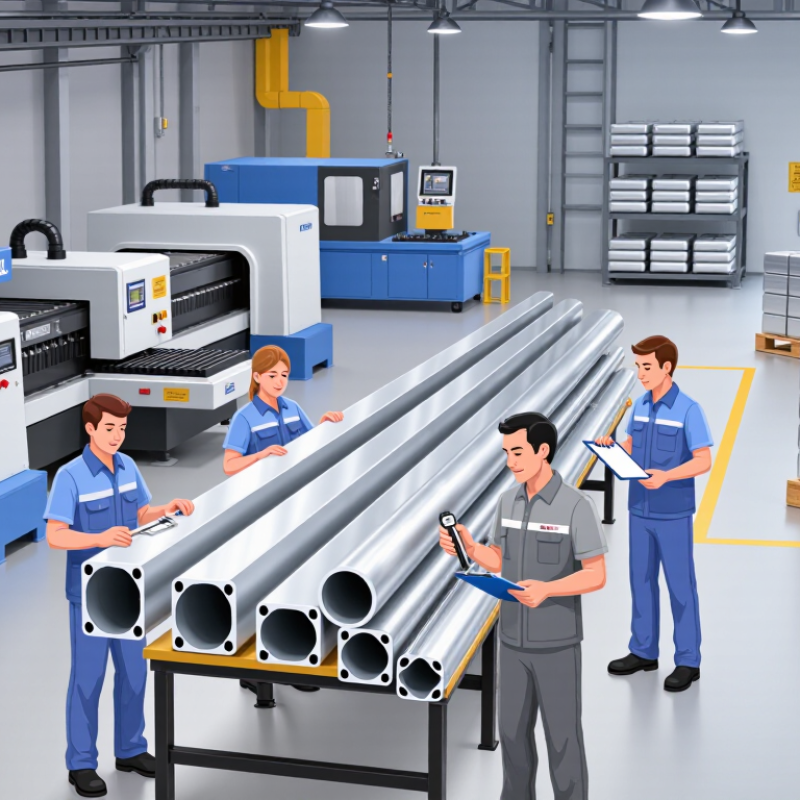
Choosing an aluminum extrusion supplier starts with a precise project brief. Define the alloy, temper, profile shape, wall thickness, and finished dimensions. Common choices include 6063 for smooth architectural surfaces and 6061 for higher structural strength. State the required tolerances, cut lengths, quantity, and delivery schedule. A supplier cannot quote accurately from a rough sketch.
Surface requirements also need detail. Specify anodizing thickness, powder coating color, gloss level, and visible-face standards. Include holes, slots, bends, machining, and packaging instructions. The Aluminum Association notes that extrusion design can reduce material use through hollow sections and integrated features. That may lower weight, but thin walls can create warping or die-flow problems. Perfect drawings still need production review.
Tips: Ask for a manufacturability review before approving tooling. Request sample measurements from critical areas. Compare tolerances with ISO 2768 or your selected industry standard. The International Aluminium Institute reports that recycled aluminum uses about 5% of the energy required for primary metal. Therefore, ask about recycled content, certification, and traceability. The USGS Mineral Commodity Summaries 2025 estimates global primary aluminum production reached roughly 72 million metric tons in 2024. Supply is broad, but quality consistency is not guaranteed. Recheck your assumptions. A lower quoted price may hide extra machining, weaker packaging, or difficult inspection requirements.
Assess Supplier Capabilities, Equipment, and Production Capacity
Choosing an aluminum extrusion supplier requires more than checking a catalog. Review press size, billet heating, die-making, aging, cutting, and surface-treatment equipment. A supplier producing window profiles may not handle thick industrial sections reliably. Ask for recent samples, dimensional inspection records, and equipment maintenance logs.
Production capacity also needs careful testing. The U.S. Geological Survey Mineral Commodity Summaries 2024 reported roughly 70 million metric tons of global aluminum smelter production in 2023. This scale does not guarantee dependable extrusion capacity. Request the number of presses, press tonnage, shift patterns, planned maintenance, and average monthly output for similar profiles. Capacity should mean available capacity, not maximum capacity on paper. That difference matters.
I have seen projects delayed when suppliers counted outsourced anodizing as internal capacity. Check die inventory, tool-change time, and backup equipment. A capable supplier should explain how it controls profile distortion, wall-thickness variation, and surface scratches. The Aluminum Association’s Aluminum Statistical Review shows how demand varies across transportation, construction, and packaging markets, so flexible scheduling is valuable. Ask for production records from comparable alloys and dimensions. One detail is often missed: measure lead time from approved drawings, not the purchase order. Supplier claims can sound impressive. Evidence is better. If inspection data is incomplete, treat that gap as a risk, even when the factory looks modern.
Verify Material Quality, Certifications, and Inspection Processes
Choosing an aluminum extrusion supplier starts with material evidence, not attractive samples. Ask for the alloy grade, temper, chemical composition, and batch traceability. A reliable supplier should provide mill certificates linked to the delivered material. Match those records with your drawings and application requirements.
Certifications also need careful review. Check whether the quality system is certified by an independent body and whether the certificate remains valid. Do not accept a logo alone. Request the certificate number, scope, and audit date. Inspection procedures should cover incoming billets, die setup, dimensions, straightness, surface finish, hardness, and tensile performance. Calibrated instruments matter. So does a documented response when results fail.
Small details reveal operating discipline.
Tips
Visit the facility if possible. Watch how operators label bundles, store records, and isolate nonconforming profiles. Ask for a recent inspection report and a sample certificate. Compare measured dimensions with the stated tolerances. A supplier may pass one test while missing another. I have found that polished documentation can still hide weak traceability, so test a production sample independently before approving regular shipments. This step costs time, but it can expose inconsistent alloy chemistry, scratches from handling, or profiles that drift after cooling. Good suppliers welcome precise questions, even uncomfortable ones.
Review Samples, Contracts, and Long-Term Partnership Potential
Choosing an aluminum extrusion supplier requires more than comparing prices. Request physical samples before signing any agreement. Examine the profile under normal lighting. Check wall thickness, corner sharpness, straightness, and surface consistency. Measure critical dimensions with calibrated tools. A polished sample can hide production weaknesses. Ask for a sample from a normal production run, not only a specially prepared piece.
The contract should describe alloy, temper, tolerances, finish, packaging, inspection methods, and delivery dates. Include clear procedures for handling rejected parts. Confirm who owns the extrusion dies and who pays for modifications. Request inspection reports, material certificates, and traceability records for each batch. Vague wording creates expensive arguments later. I once overlooked packaging details, and minor scratches appeared during transport. That mistake changed how I review supplier agreements.
Long-term partnership potential depends on daily reliability. Ask how the supplier manages sudden volume changes, tooling repairs, and quality complaints. Visit the facility if possible. Observe cleanliness, production records, and how workers handle finished profiles. Speak with the technical contact, not only the salesperson. Good suppliers explain limitations instead of promising everything. Still, communication can weaken after the first order. Set regular review meetings and measurable performance targets. Compare actual lead times with quoted schedules. Discuss future designs, prototypes, and shared process improvements. A supplier should support your engineering team without controlling every decision. Trust develops through consistent evidence. Check it repeatedly.






 wechat
