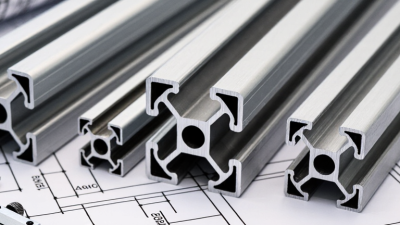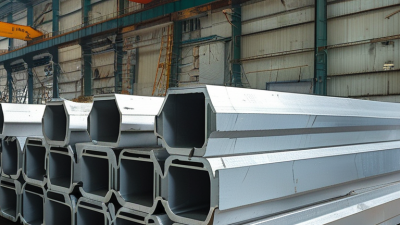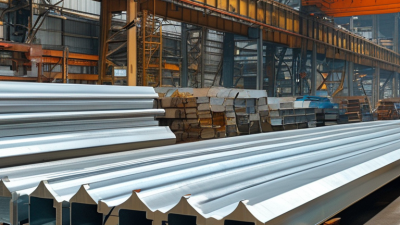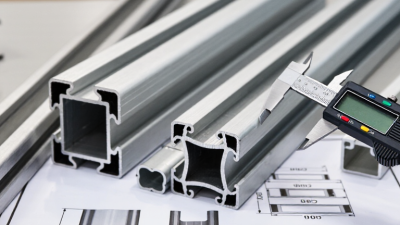
Choosing the best aluminum extrusion profiles for 2026 requires more than comparing attractive catalogs. Real projects reveal the difference. A profile that looks efficient may flex under a long glass panel, trap water, or waste time during installation. This guide examines Aluminum Extrusion Profiles through practical engineering criteria, including alloy selection, wall thickness, tolerances, surface finish, and load behavior. It also considers thermal movement, corrosion exposure, machining requirements, and fastener compatibility. Small details matter. A clean corner, consistent slot, or accurately cut length can reduce labor across thousands of assemblies.
Our evaluation draws on fabrication experience, manufacturer data, technical standards, and feedback from installers who handle these systems daily. We compare profiles for architectural framing, solar structures, machine guards, automation equipment, and lightweight industrial assemblies. The strongest option is not always the thickest. Sometimes, a lighter section offers better value when calculations support it. However, published strength figures need careful reading. Different test methods, unsupported spans, joint designs, and environmental conditions can change actual performance. We learned this the hard way during an early comparison. We ranked a visually robust profile too highly before checking connector availability. That omission changed installation costs and delayed the final recommendation. The 2026 market also brings more recycled-content claims, improved finishing technologies, and smarter modular designs. Claims still require verification. This introduction sets a clear path for identifying dependable Aluminum Extrusion Profiles while balancing performance, cost, availability, and long-term service needs.
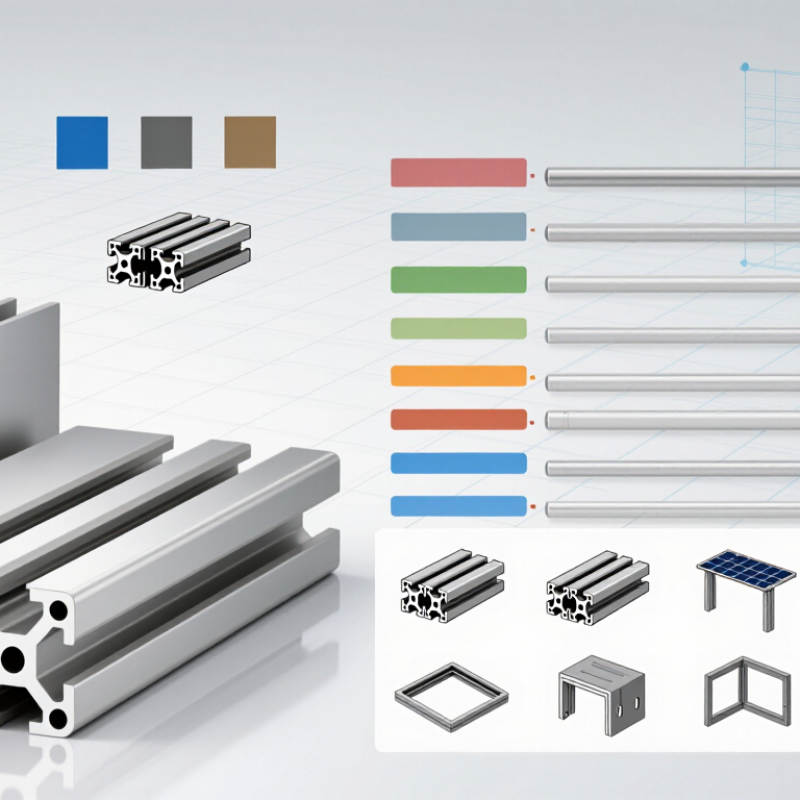
What Are the 2026 Best Aluminum Extrusion Profiles?
In 2026, a high-quality aluminum extrusion profile begins with verified alloy chemistry. The chosen alloy should match the load, corrosion exposure, and finishing process. Dimensional control matters just as much. A one-millimeter error can disrupt assembly, seals, or thermal performance. Profiles should include documented tolerances, tensile strength, hardness, and elongation results. These records support traceability from billet to finished section.
The International Aluminium Institute reported more than 70 million metric tonnes of primary aluminum production in 2023. That scale increases pressure on manufacturers to improve efficiency and material accountability. A strong profile therefore needs a measured sustainability record, not vague environmental claims. Recycled content, remelting losses, energy use, and end-of-life recyclability should appear in technical documentation. The institute also identifies recycling as requiring only a small fraction of the energy used for primary aluminum production.
Surface quality is equally practical. A profile should show consistent anodizing, coating adhesion, color control, and resistance to scratches. Engineers should inspect corners, hollow chambers, weld lines, and cut ends. Small defects often become visible after installation. They are expensive then.
I would not call this a perfect checklist. Actual performance still depends on die design, heat treatment, inspection frequency, and storage conditions. The Aluminum Association’s statistical and technical publications reinforce the value of standardized testing and traceable production data. In practice, the best profile is not merely attractive. It is predictable under real loads, real weather, and repeated handling.
The best 2026 aluminum extrusion profile depends on the application, not fashion. In practical design reviews, 6063 remains a strong choice for architectural frames, lighting channels, and visible trims. It extrudes smoothly and accepts anodizing evenly. For higher structural loads, 6061 and 6005A offer better strength after heat treatment. Their machining response is also useful. The Aluminum Association’s Aluminum Statistical Review identifies building, transportation, and packaging as major aluminum markets, reinforcing the need for application-specific alloy selection.
6063 works well with clear or colored anodizing, especially when surface uniformity matters. Anodized layers improve appearance and support corrosion resistance, but they do not hide poor die lines or scratches. Powder coating provides broader color options and thicker coverage. AAMA 2605 specifications are commonly referenced for high-performance architectural coatings. Marine or industrial environments may justify a more robust coating system, although the profile design still needs drainage and isolation details.
Recycled content deserves attention in 2026. The International Aluminium Institute reports that recycling aluminum requires roughly 5% of the energy used for primary production. That advantage is meaningful, but recycled billet quality must be verified. Chemistry can vary. Small variations may affect color matching, strength, or extrusion surface quality. I would not specify recycled content without supplier testing and traceability. A polished finish can expose weaknesses quickly. The “best” profile is often the one that balances alloy strength, finish durability, tolerances, and realistic manufacturing limits.
In 2026, the best aluminum extrusion profiles will be judged by performance, not appearance alone. Shape controls how efficiently a profile carries force. A box section resists bending well, while a T-slot profile supports adjustable frames and quick assembly. Rounded corners reduce stress concentration around busy joints. Small changes matter.
In practical equipment design, I have seen hollow profiles reduce weight without making a frame feel weak. Internal ribs improve stiffness, especially across long spans. However, adding too many ribs increases material use and may complicate machining. That trade-off deserves careful checking. A lighter frame can still fail if connections are poorly designed.
Profile geometry also improves functionality. Channels can hide cables, guide sliding parts, or hold protective panels. Wider bases improve stability on workbenches and mobile structures. Thin walls suit covers, but they may dent during handling. Designers should compare load, span, vibration, and fastening method before selecting a shape. Alloy choice matters too; common architectural alloys may not suit heavy structural applications. Surface treatment can improve durability, but it cannot correct an undersized profile. This is where early testing helps: measure deflection, inspect joint movement, and review the design after real assembly. The first model is rarely perfect.
A practical comparison of common aluminum extrusion profile shapes, alloy options, and performance characteristics for structural, architectural, transport, and industrial applications.
| Profile Shape | Typical Alloy and Temper | Indicative Yield Strength | Approximate Density | Strength-to-Weight Benefit | Functional Advantages | Typical Applications | Selection Considerations |
|---|---|---|---|---|---|---|---|
|
Rectangular Hollow Profile Closed box section with uniform or variable wall thickness |
6061-T6 6005A-T6 6082-T6 |
145–260 MPa Depending on alloy, temper, and wall thickness |
Approximately 2.70 g/cm³ |
★★★★★ High bending and torsional efficiency because material is distributed away from the neutral axis |
Good resistance to bending and twisting; clean external surfaces; suitable for lightweight frames | Machine bases, equipment frames, transport structures, guarding, support beams | Corner radii and internal access should be checked. Closed sections may require special joining or drainage details. |
|
Square Hollow Profile Symmetrical closed section |
6063-T5 6061-T6 6005A-T6 |
110–260 MPa | Approximately 2.70 g/cm³ |
★★★★★ Efficient in multiple bending directions with a high stiffness-to-mass ratio |
Balanced strength around both axes; easy to align; suitable for modular construction | Automation frames, solar support structures, architectural frames, workstations | A good general-purpose geometry, but local wall buckling can govern when walls are thin and loads are concentrated. |
|
I-Beam Profile Central web with two flanges |
6061-T6 6082-T6 6005A-T6 |
145–260 MPa | Approximately 2.70 g/cm³ |
★★★★★ Very efficient for bending about the major axis |
High section modulus with less material than a solid rectangular section of comparable depth | Crane components, machine rails, long-span beams, platform structures | Excellent for major-axis bending, but less efficient for torsion and minor-axis bending than closed sections. |
|
T-Slot Profile Extruded frame section with longitudinal slots |
6063-T5 6061-T6 |
110–240 MPa | Approximately 2.70 g/cm³ |
★★★★☆ Good structural efficiency with high assembly flexibility |
Allows sliding nuts, brackets, panels, and guards to be mounted without extensive drilling or welding | Automation cells, conveyors, laboratory frames, machine guarding, adjustable workstations | Slot openings reduce local section area. Joint design, fastener preload, and unsupported span must be verified. |
|
L-Angle Profile Two perpendicular legs forming an open angle |
6063-T5 6061-T6 |
110–240 MPa | Approximately 2.70 g/cm³ |
★★★☆☆ Low mass and effective for edge reinforcement and framing |
Simple geometry; easy to cut, drill, fasten, and use as a protective or finishing trim | Brackets, edge protection, cabinet frames, architectural trim, light-duty supports | Open sections are more vulnerable to twisting and eccentric loading than box or tube profiles. |
|
U-Channel Profile Open channel with a web and two side flanges |
6063-T5 6061-T6 6082-T6 |
110–260 MPa | Approximately 2.70 g/cm³ |
★★★★☆ Efficient for one-direction bending and edge-supported components |
Provides a continuous guide, cover, or mounting channel; easy access for fasteners and inserts | Sliding tracks, panels, frames, cable covers, heat sinks, structural edge members | The open side reduces torsional rigidity. Flange width and thickness should match the applied load. |
|
Round Tube Profile Circular hollow section |
6063-T5 6061-T6 6082-T6 |
110–260 MPa | Approximately 2.70 g/cm³ |
★★★★★ Excellent torsional efficiency and uniform resistance in all radial directions |
Smooth aerodynamic surface; good resistance to twisting; suitable for bending and pressure-related enclosures | Handrails, bicycle components, fluid lines, aerospace-style frames, lightweight structures | Round geometry can complicate clamping and attachment. Wall thickness and buckling resistance are important. |
|
Heat-Sink Profile Base plate with multiple longitudinal fins |
6063-T5 6063-T6 |
90–215 MPa | Approximately 2.70 g/cm³ |
★★★☆☆ Optimized primarily for thermal performance rather than structural loading |
Large surface area improves heat dissipation; aluminum provides high thermal conductivity and low mass | LED lighting, power electronics, motor controllers, battery systems, communication equipment | Fin height, fin spacing, airflow, contact flatness, and thermal interface quality determine actual performance. |
|
Multi-Cavity Profile Complex section with several internal hollow chambers |
6005A-T6 6061-T6 6082-T6 |
145–260 MPa | Approximately 2.70 g/cm³ |
★★★★★ Can combine high stiffness, low mass, thermal separation, and integrated functions |
Integrates channels, fastener passages, cable routes, and reinforcement ribs into one extrusion | Electric vehicle structures, rail interiors, precision equipment, modular enclosures | Die complexity, dimensional control, minimum wall thickness, and straightness requirements can increase cost. |
|
Custom Ribbed Profile Open or closed section with strategically placed reinforcing ribs |
6061-T6 6005A-T6 6082-T6 |
145–260 MPa | Approximately 2.70 g/cm³ |
★★★★★ Ribs increase moment of inertia without adding material across the entire section |
Can be optimized for load paths, anti-slip surfaces, stiffness, drainage, or component integration | Vehicle floors, structural panels, platforms, machine housings, protective covers | Rib spacing, draft angles, die balance, and stress concentration around sharp transitions require engineering review. |
Technical note: Aluminum extrusion strength values shown are indicative ranges for commonly used wrought alloys and tempers. Actual mechanical properties depend on alloy designation, temper, section thickness, extrusion direction, heat treatment, and applicable material standards. For final design, verify section modulus, moment of inertia, deflection, local buckling, joint strength, corrosion environment, and manufacturing tolerances.
Buyers should judge aluminum extrusion profiles by verified performance, not catalog appearance. Start with alloy and temper. 6063-T5 offers clean surfaces and practical corrosion resistance for frames, trims, and light structures. 6061-T6 provides higher strength for brackets, machine bases, and load-bearing assemblies. The right choice depends on real loads. Bigger is not always better.
Ask for dimensional inspection records and material certificates. Standards such as ASTM B221, EN 755, and EN 12020 may apply, depending on the market and profile use. Confirm which revision the supplier follows. A quality management system, such as ISO 9001, supports traceability, but certification alone cannot prove every shipment is consistent. Check tolerances, straightness, wall thickness, and corner radii. Small deviations can complicate sliding joints and gasket installation.
Performance testing should match the working environment. Review tensile strength, yield strength, surface hardness, and corrosion behavior. For outdoor profiles, inspect anodizing thickness or powder-coating specifications. Ask how samples were tested, including test direction and laboratory conditions. Thermal expansion also matters near glass, motors, and dissimilar metals. Leave suitable movement space.
In practice, I would measure several cut lengths before approving production. I would also revisit the design after assembly. A profile that looked rigid on paper may flex under vibration. This is where many purchasing decisions need a second look.
Selecting the best aluminum extrusion profile starts with the project’s real load, not its appearance. Define span, weight, deflection limit, temperature, and fixing points before choosing a shape. A hollow profile can reduce mass, but thin walls may twist around drilled joints. For a 1,200-millimeter frame carrying equipment, I would check bending stress, connector pull-out, and vibration separately. One attractive profile may fail at the fastening point.
Material choice also deserves evidence. The International Aluminium Institute reports that recycled aluminum can require about 95% less energy than primary aluminum. However, recycled content alone does not guarantee the right performance. Ask for alloy, temper, dimensional tolerances, and surface-treatment data. EN 755 and EN 12020 provide useful references for extrusion dimensions and tolerances. These standards improve reliability, though they do not replace project-specific testing. I have seen designs become expensive because the profile was selected before the joint detail was tested. That mistake is easy to repeat.
Tips: Sketch the load path. Keep fasteners close to supported walls. Compare weight per meter, inertia, cut cost, and machining time. Request mill certificates and a tolerance table. Leave access for tools. If the design is uncertain, prototype one corner first. It may expose a weakness earlier. Be willing to revise the profile after testing; the first selection is rarely perfect.
The best extrusion profile depends on the required strength, weight, corrosion resistance, surface finish, and manufacturing complexity. Alloy and temper selection should be made together with the profile geometry and wall thickness.
The chart compares representative minimum tensile strength and 0.2% proof stress values for commonly extruded aluminum alloys in typical T5 or T6 tempers. Exact values vary according to the applicable standard, section thickness, and temper. Use 6063 for architectural appearance and general-purpose frames, 6061 or 6082 for higher structural strength, and 6005A for medium-to-high strength structural profiles with good extrusion performance.