China Top 10 Aluminum Extrusion Manufacturers?
China’s Aluminum Extrusion industry combines large-scale production with increasingly precise engineering. Its factories supply profiles for windows, curtain walls, solar frames, electric vehicles, machinery, and industrial automation. However, size alone does not prove manufacturing strength. A reliable evaluation must examine alloy control, die-making skill, surface treatment, dimensional tolerances, testing, and delivery consistency.
The shortlist should reflect practical purchasing risks. An attractive catalog means little if the supplier cannot repeat a tight tolerance across thousands of meters. Experienced buyers inspect billet storage, extrusion presses, aging furnaces, and powder-coating lines. They also request mill certificates, inspection records, sample profiles, and clear packaging photographs. Small details matter.
Dr. A. K. Gupta, a recognized aluminum extrusion researcher, has stated, “Good extrusion begins with control of metal flow, temperature, and die design.” That principle remains useful when comparing Chinese manufacturers. Strong companies understand how die geometry affects weld lines, distortion, surface quality, and material waste. They also communicate honestly about minimum order quantities and tooling costs.
Still, no ranking is perfectly objective. A factory serving architectural projects may not suit aerospace components. A low quotation may hide longer lead times or weaker inspection procedures. Some manufacturers look impressive during a visit, yet their after-sales support remains uncertain. This guide therefore considers production capability, technical experience, certifications, customization, export performance, and customer feedback. The goal is not to declare one universal winner. It is to help buyers identify a dependable partner for specific Aluminum Extrusion requirements.
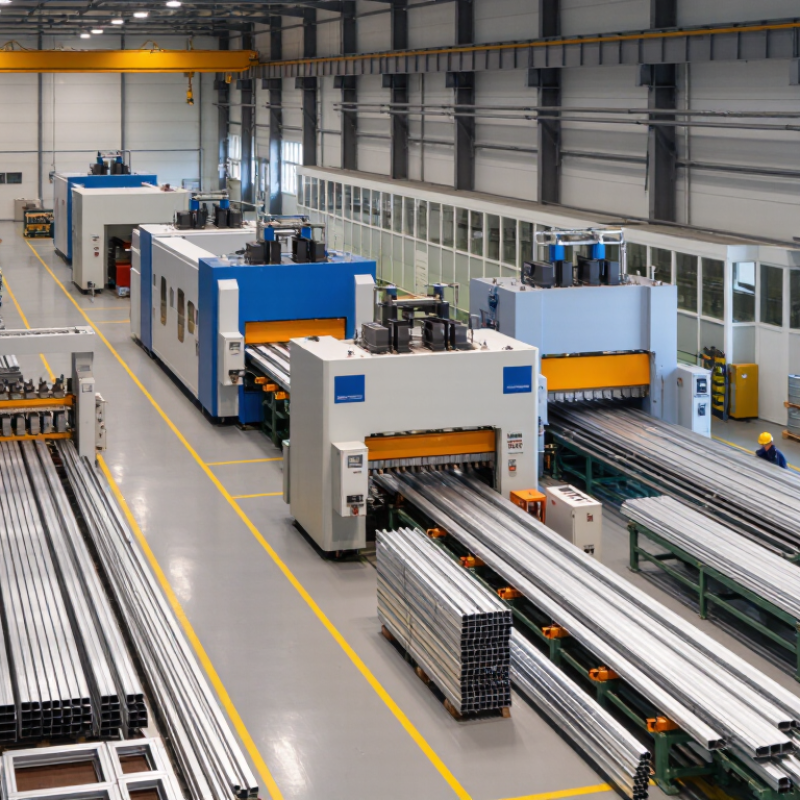
A top-ten list should measure manufacturing depth, not advertising reach. China produced about 41.6 million tonnes of primary aluminum in 2023, according to the International Aluminium Institute. That scale creates strong supply access, but volume alone proves little. A leading extrusion manufacturer controls alloy chemistry, billet preheating, die design, quenching, and aging. During a practical audit, buyers should inspect furnace records, die-maintenance logs, and sample profiles. Wall thickness should remain consistent along the full length. Surface scratches should not appear after packing.
Reliable suppliers also connect quality data with delivery discipline. ISO 9001 certification helps, but it is not a substitute for process evidence. Ask for dimensional inspection reports, tensile-test results, and batch traceability. A barcode linked to billet, die, operator, and inspection time is a useful detail. The International Aluminium Institute states that recycled aluminum uses roughly 5% of the energy required for primary production. Therefore, serious manufacturers should document scrap separation, recycled content, and electricity management. Environmental claims need numbers.
No factory performs perfectly. That matters. A credible supplier admits defect rates, explains corrective actions, and preserves failed samples for review. The strongest candidates combine engineering support with flexible minimum orders, stable lead times, and clear tolerance discussions. However, even these indicators can mislead when audits are too brief. A two-hour showroom visit cannot reveal night-shift controls, subcontracting, or seasonal capacity pressure.
A credible ranking needs more than production volume. The International Aluminium Institute reported that China produced about 41.6 million tonnes of primary aluminum in 2023. That scale supports a deep extrusion supply chain, but it does not prove consistent downstream quality. Our selection model therefore examines verified extrusion capacity, die-making capability, alloy range, and delivery performance.
Quality evidence matters. We review ISO 9001 records, third-party laboratory results, and customer audit histories where available. We also check compliance with standards such as GB/T, ASTM, and EN. Technical strength includes tolerance control, surface treatment, thermal-break assembly, and profiles for construction, transport, and industrial equipment. The China Nonferrous Metals Industry Association’s industry statistics help cross-check production trends and sector capacity.
Numbers can mislead.
A supplier may report total aluminum output instead of extrusion output. That distinction matters. We compare published figures with factory observations, equipment counts, and recent project references. Sustainability also enters the assessment. The International Aluminium Institute identifies recycling and lower-carbon production as major priorities for aluminum’s future. However, carbon data is not always independently verified. That remains a weakness in many rankings. We score transparency, traceability, export experience, technical service, and complaint handling alongside price. The final ten should reflect dependable performance, not promotional language.
China’s top ten aluminum extrusion manufacturers differ more by capability than by production volume.
The first profile is a high-capacity producer using large presses for architectural frames and industrial rails. The second focuses on precision profiles, often holding tight dimensional tolerances for automation equipment.
The third combines extrusion with anodizing, powder coating, and machining under one roof. Faster coordination matters.
The fourth manufacturer specializes in thermal-break systems for energy-efficient windows and curtain walls.
The fifth serves transport projects, producing lightweight sections for rail vehicles and commercial equipment.
The sixth is known for custom tooling and short development cycles. Its engineers usually review drawings before quoting, although some revisions still take longer than expected.
The seventh supplies marine and outdoor profiles, where corrosion resistance and surface consistency receive close attention.
The eighth profile represents a vertically integrated factory with billet casting, extrusion, finishing, and packaging. This structure can improve traceability.
The ninth concentrates on small and medium profiles for electronics, lighting, and furniture components.
The tenth competes through flexible minimum orders and export documentation, supporting overseas buyers with inspection records, alloy certificates, and packing photographs.
Reliable manufacturers also test hardness, coating thickness, tensile strength, and profile dimensions.
Factory visits reveal practical details that brochures often omit, such as die storage, cooling control, and workplace organization.
Capacity figures alone can mislead. A large press does not guarantee better tolerances, cleaner surfaces, or more responsive service.
China’s leading aluminum extrusion manufacturers produce profiles for windows, doors, curtain walls, machinery frames, and transport systems. They commonly work with 6061, 6063, and 6082 alloys. Each alloy supports different strength, finish, and machining requirements.
Their capabilities often include billet heating, precision extrusion, stretching, cutting, heat treatment, and surface finishing. Anodizing, powder coating, and mill finishing serve architectural and industrial applications.
Many facilities also provide CNC machining, drilling, tapping, welding, and custom packaging. These services reduce handling between suppliers, although one factory may not excel in every process.
Applications Automotive, solar energy, electronics, construction, furniture, and industrial automation are major application areas. Reliable manufacturers use dimensional inspection, alloy verification, hardness testing, and coating checks. They should provide clear drawings, tolerance reports, and traceable production records. Experience matters here. A polished catalog does not prove stable output.
Tips: Ask for recent inspection samples, not only product photos. Confirm minimum order quantities, tooling charges, lead times, and packaging details. Review tolerances before approving a prototype. Request a small trial batch when the profile has complex hollows or tight dimensions. Be careful with broad claims; even capable factories can miss a requirement when specifications are vague.
China Top 10 Aluminum Extrusion Manufacturers?
How to Compare and Choose a Chinese Aluminum Extrusion Manufacturer
A top-ten list is only a starting point. The right supplier must match your alloy, profile shape, order volume, and delivery schedule. Ask for recent production samples, not only attractive catalog images. Check whether the factory handles 6063, 6061, or other required alloys consistently. Their technical team should explain temper, wall thickness, die design, and tolerance limits clearly.
Request a written quality plan. It should cover chemical testing, dimensional inspection, surface checks, and packaging protection. For critical profiles, ask for inspection reports linked to batch numbers. Traceability matters when a shipment contains hundreds of identical lengths. A reliable manufacturer should also provide die maintenance records and explain how rejects are controlled. Small details often reveal real manufacturing discipline.
Compare tooling fees, minimum quantities, lead times, and payment terms in one table. Confirm whether quotations include cutting, anodizing, powder coating, packing, and inland transport. Visit the factory if possible, or arrange a live video inspection. A polished website proves little. I have seen promising samples hide weak communication during mass production. That risk deserves attention. Allow time for a trial order, because even experienced buyers can underestimate packaging damage, color variation, or profile distortion.
| No. | Anonymous Manufacturer Profile | Typical Annual Extrusion Capacity | Press Range | Common Alloy Capability | Profile Size Range | Surface Treatments | Tooling & Quality Capability | Typical Industries Served | Key Selection Consideration | Verification Status |
|---|---|---|---|---|---|---|---|---|---|---|
| 1 | Profile A — Large integrated producer | 30,000–60,000 metric tons/year | 600–5,000 tons | 6061 6063 6005A | Small to large architectural and industrial sections | Anodizing, powder coating, electrophoresis, PVDF, mill finish | In-house die design, CNC machining, dimensional inspection, batch traceability | Construction, transportation, solar, industrial equipment | Suitable for high-volume programs requiring multiple downstream processes | Shortlist candidate |
| 2 | Profile B — Architectural systems specialist | 15,000–35,000 metric tons/year | 800–3,000 tons | 6063 6061 6060 | Window, door, curtain-wall, and façade profiles | Anodizing, powder coating, electrophoresis, wood-grain transfer | Profile design support, die correction, color control, surface inspection | Windows, doors, façades, interior systems | Best evaluated through finish samples, color consistency, and assembly testing | Shortlist candidate |
| 3 | Profile C — Solar and renewable-energy supplier | 20,000–45,000 metric tons/year | 1,000–4,000 tons | 6005A 6063 6061 | Rails, frames, brackets, mounting channels, and structural sections | Mill finish, anodizing, powder coating, precision cutting | Long-length control, straightness inspection, hole punching, CNC cutting | Solar mounting, energy storage, electrical enclosures | Confirm load requirements, corrosion resistance, and cut-length tolerance | Shortlist candidate |
| 4 | Profile D — Industrial precision extrusion producer | 8,000–25,000 metric tons/year | 600–2,500 tons | 6061 6063 6082 | Small and medium precision profiles with tighter tolerances | Mill finish, anodizing, powder coating, brushing, polishing | CNC machining, drilling, tapping, saw cutting, CMM inspection | Automation, machinery, electronics, heat dissipation | Compare tolerance capability, inspection reports, and machining yield | Shortlist candidate |
| 5 | Profile E — Export-oriented OEM manufacturer | 10,000–30,000 metric tons/year | 800–3,500 tons | 6063 6061 6005A | Custom profiles developed from customer drawings | Anodizing, powder coating, PVDF, polishing, brushing | English technical support, export packing, pre-shipment inspection | Construction, furniture, industrial OEM, retail fixtures | Review communication quality, packaging standards, and export experience | Verify references |
| 6 | Profile F — High-volume standard-profile producer | 25,000–50,000 metric tons/year | 1,000–4,000 tons | 6063 6061 6060 | Standard architectural, enclosure, and framing profiles | Mill finish, anodizing, powder coating, electrophoresis | Automated aging, extrusion monitoring, batch documentation | Building materials, modular systems, general fabrication | Compare minimum order quantity, lead time, and stock availability | Shortlist candidate |
| 7 | Profile G — Small-batch customization specialist | 3,000–12,000 metric tons/year | 500–1,800 tons | 6063 6061 | Small, decorative, and moderately complex custom profiles | Anodizing, powder coating, polishing, brushing, laser marking | Rapid prototyping, low-volume tooling, sample development | Furniture, lighting, consumer products, specialty equipment | Useful for development projects; confirm capacity for production scaling | Verify scalability |
| 8 | Profile H — Heavy-duty structural extrusion producer | 12,000–30,000 metric tons/year | 1,500–6,000 tons | 6061 6082 6005A | Large structural, transportation, and equipment sections | Mill finish, anodizing, powder coating, shot blasting | Large-section handling, heat treatment, straightness and strength testing | Rail transit, marine equipment, machinery, infrastructure | Check maximum section dimensions, mechanical properties, and transport packaging | Verify technical fit |
| 9 | Profile I — Fully finished component supplier | 6,000–20,000 metric tons/year | 600–2,500 tons | 6063 6061 6082 | Profiles supplied as cut, machined, assembled, or packaged components | Anodizing, powder coating, PVDF, CNC finishing, assembly | Cutting, drilling, tapping, milling, assembly, final inspection | Industrial OEM, HVAC, furniture, electronics | Compare total delivered cost rather than extrusion price alone | Shortlist candidate |
| 10 | Profile J — Cost-focused regional manufacturer | 5,000–18,000 metric tons/year | 500–2,000 tons | 6063 6061 | Common profiles and moderately customized sections | Mill finish, anodizing, powder coating | Basic die development, routine dimensional inspection, standard packaging | Construction, household products, general industrial use | Suitable for price-sensitive projects after quality and delivery audits | Audit before approval |