China Top 10 Standard Aluminum Profiles Manufacturers
Choosing a supplier from a “China Top 10 Standard Aluminum Profiles Manufacturers” list takes more than comparing prices. The right partner must turn drawings into consistent, usable profiles. A sample may look clean, yet small differences in wall thickness, straightness, or finish can affect assembly. Check the details.
Standard Aluminum Profiles serve many applications, from window frames and machine guards to shelving and solar-support structures. Buyers should compare alloy options, dimensional tolerances, extrusion capacity, surface treatments, inspection methods, and delivery consistency. Ask for technical data and sample parts. Confirm how the manufacturer handles tooling changes, packaging, and quality concerns. A polished brochure is not proof of steady production. Neither is the lowest quote.
Aluminum metallurgy expert Dr. Jürgen Hirsch is a useful technical reference for understanding how processing affects material properties. The following is an editorial paraphrase, not a verified quotation: “A profile’s performance depends on both its alloy and its processing.” That distinction matters. This overview introduces ten Chinese manufacturers and considers their capabilities, product range, certifications, and export experience. Company claims can change, and available evidence may be uneven. Treat the list as a starting point, then verify current specifications, factory processes, and project references directly. Good sourcing takes careful questions.
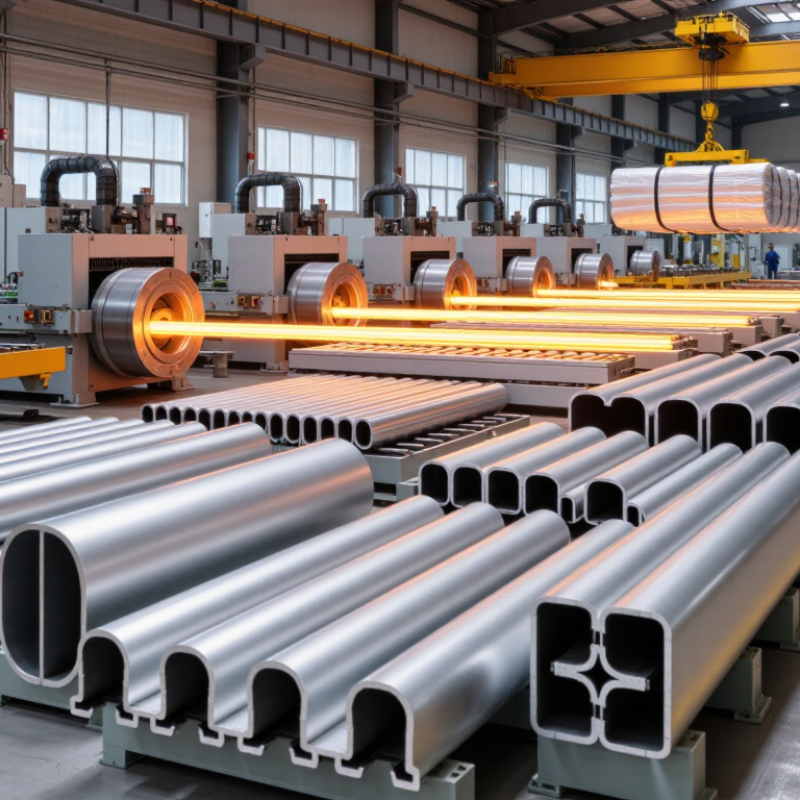
Understanding Standard Aluminum Profiles and Their Role in China’s Industry
Standard aluminum profiles are extruded sections with repeatable cross-sections, dimensions, and tolerances. Common forms include angles, channels, tubes, and T-slotted sections. Their value is practical: consistent interfaces can simplify cutting, joining, guarding, and replacement on factory lines or building projects. Small differences matter. A two-millimeter mismatch can create extra fitting work. “Standard” still needs qualification, since dimensions and tolerances vary by product series and applicable specifications.
China’s National Bureau of Statistics recorded 41.59 million tonnes of primary aluminum production in 2023. The International Aluminium Institute reported about 70.6 million tonnes of global primary production that year. These figures describe upstream metal, not aluminum profile output. That distinction matters: a large material base alone does not prove extrusion quality or delivery reliability. Profiles also depend on alloy choice, billet consistency, die design, heat treatment, and inspection. A structural rail needs more than a familiar shape; wall thickness and temper affect stiffness and fit. Standardization helps, but it cannot remove every design trade-off.
How Manufacturers Are Evaluated for This Top 10 List
A useful top-ten comparison should explain how each manufacturer was assessed, not simply list familiar names. Evaluation can consider alloy range, extrusion capacity, dimensional consistency, surface finish, and the ability to produce standard shapes reliably. Technical evidence matters: reviewers may compare product specifications, sample measurements, quality documents, and responses to practical questions. Samples matter. A profile that looks clean in a catalog may show uneven edges or finish variation in person.
Tips: Request a sample and confirm its alloy, dimensions, and finish requirements in writing. Ask how tolerances are checked and how production changes are communicated. Keep the answers for comparison.
A fair assessment should also examine delivery performance, packaging, communication, and support after an order. These details affect whether profiles arrive ready for cutting and assembly, especially when projects depend on consistent lengths. No scorecard is perfect. Public information may be incomplete, and sample results may not reflect every production run. For that reason, a ranking should distinguish verified facts from estimates and give more weight to repeatable evidence than promotional claims. Reviewers should also note what they could not verify; leaving uncertainty visible is more useful than pretending every supplier was tested under identical conditions.
Profiles of 10 Leading Standard Aluminum Profile Manufacturers in China
China’s standard aluminum profile sector serves construction, machinery, transport, and interior applications. Grand View Research estimated the global aluminum extrusion market at about US$87.4 billion in 2023, with growth projected through 2030. That wider market context matters: Chinese suppliers compete on more than price. Buyers also compare alloy consistency, dimensional tolerance, surface finish, and delivery reliability.
Profiles of ten leading Chinese manufacturers should therefore focus on verifiable capabilities, not just product catalogs. Useful details include press capacity, common alloy grades, available shapes, finishing processes, and quality-control methods. A warehouse sample can reveal what a specification sheet cannot: edge definition, coating uniformity, and packaging care. Small details matter. Production scale alone does not guarantee steady tolerances across repeat orders.
The comparison should also note limits. Public reports describe market trends, but they rarely verify each factory’s current capacity or rejection rate. The International Aluminium Institute’s production data can frame the industry, while supplier-specific claims need direct documentation. A ranking can look cleaner than reality. Buyers should check recent test reports, sample parts, and lead-time records before treating any profile as a dependable partner.
Comparing Product Ranges, Production Capabilities, and Quality Standards
A useful comparison of the top ten standard aluminum profile manufacturers should look beyond catalog size.
Some suppliers offer common T-slot, window, door, and structural sections; others specialize in custom dies and made-to-order lengths. Check whether the listed alloys and tempers match the intended load, environment, and machining process.
Details matter. A broad range is not automatically a better fit.
Production capability affects lead time and consistency.
Ask about extrusion press capacity, die maintenance, cutting tolerances, and monthly output for similar orders. A factory may quote a short delivery window, but confirm it against tooling availability and finishing schedules.
Not always.
Quality checks should include dimensional inspection, mechanical-property records, surface-finish controls, and traceability by batch. For coated profiles, request coating-thickness results and clear acceptance criteria. Certifications can support confidence, but they do not replace order-specific inspection data.
Buyers should compare actual reports, not just certificate logos.
There are limits to any ranking.
Public information may not reveal scrap rates, process stability, or how a supplier handles defects. Request sample sections and review a recent inspection report before committing to a large run. Even then, one sample cannot represent every production batch. Define tolerances and packaging needs in writing, especially for long profiles that may bend during transport.
Choosing a Chinese Manufacturer for Your Project Requirements
Choosing a Chinese manufacturer for standard aluminum profiles starts with the drawing, not the quotation.
Specify alloy and temper, section dimensions, wall thickness, straightness, and finish.
A 0.2 mm variation can affect a sliding assembly or gasket fit.
Small details matter. Ask whether the supplier can hold the tolerance across a production run, not only on one sample.
Request a production sample made with the intended die and surface treatment. Check corner definition, burrs, color consistency, and fit using your actual connectors. Review inspection records and ask how defective pieces are separated from accepted stock.
A polished sample proves little.
Confirm press capacity, tooling terms, minimum order quantity, monthly output, and realistic lead times. Ask for recent measurements, not promises alone. Check packaging too: thin foam between profiles may prevent scratches during a long shipment.
Communication is part of quality control.
Send one controlled drawing revision and document approved changes. Compare quotations line by line, including tooling, finishing, packing, and delivery terms. Request material and coating documentation relevant to your specification, then check it against the delivered batch.
One uncomfortable point: the cheapest quote may look clear until a delayed die or uneven finish appears.
Allow time for a pilot order, inspect it before scaling, and record corrections. No supplier is flawless; responsive problem-solving can matter more than a perfect sales promise.







 wechat
