Top 10 Essential Tips for Sourcing Aluminum Profiles Globally
Sourcing aluminum profiles globally presents unique challenges and opportunities. Industry expert John Smith, a renowned consultant in aluminum manufacturing, once said, "Understanding the market is crucial for success." This statement emphasizes the importance of market knowledge in sourcing decisions.
Aluminum profiles are widely used in construction, transportation, and various industrial applications. Global sourcing requires a comprehensive strategy that considers quality, cost, and supplier reliability. Many buyers overlook crucial details, leading to unexpected costs. When sourcing aluminum profiles, focusing on suppliers’ certifications and past performance is essential.
Emerging markets present abundant opportunities but also pose risks. The inconsistency in product quality can challenge even seasoned professionals. Reflecting on past mistakes can improve future sourcing strategies. By prioritizing reliable partnerships, companies can enhance their supply chain for aluminum profiles and achieve better results.

Understanding the Importance of Aluminum Profiles in Manufacturing
Aluminum profiles play a crucial role in modern manufacturing. They are lightweight, durable, and offer high strength-to-weight ratios. According to the Aluminum Association, the aluminum market is expected to reach $189 billion by 2027. This growth underscores the expanding importance of aluminum profiles across multiple industries, from construction to aerospace.
Industries are increasingly relying on aluminum profiles for their adaptability and efficiency. For instance, the construction sector utilizes them for frameworks, facades, and roofs. Their resistance to corrosion further enhances their appeal. However, sourcing aluminum profiles globally comes with challenges. Supply chain disruptions can lead to delays and increased costs. Not every supplier can guarantee the quality and specifications required.
Furthermore, manufacturers need to consider the environmental impact. Recycling aluminum profiles is essential for sustainability. The recycling process saves 95% of the energy required to produce primary aluminum. As a result, choosing suppliers who practice responsible sourcing is crucial. In a market susceptible to fluctuations, understanding these dynamics is key to making informed sourcing decisions.
Key Factors to Consider When Sourcing Aluminum Profiles Globally
When sourcing aluminum profiles globally, several key factors must be meticulously considered. The demand for aluminum profiles is projected to reach $180 billion by 2025, driven by rising applications in automotive and construction industries. Carefully evaluating suppliers ensures compliance with international quality standards. A well-documented supply chain helps maintain transparency and build trust.
Quality assurance is paramount. Certifications like ISO 9001 are essential indicators of manufacturing reliability. However, it’s often challenging for small and medium enterprises to verify these certifications. Communication barriers can complicate this process. Understanding cultural differences is crucial. Relationships in some regions may rely heavily on personal trust rather than formal agreements.
Ultimately, costs are a significant concern. While lower prices may attract attention, hidden costs can emerge from poor quality, leading to further expenses. According to the Aluminum Association, a 10% increase in material quality can result in a 25% decrease in long-term operational costs. Therefore, it is vital to weigh cost against quality to make informed decisions.
Identifying Reliable Suppliers and Manufacturers in the Aluminum Industry
Finding reliable suppliers in the aluminum industry can be challenging. Focus on identifying manufacturers with proven track records. Examine their certifications and industry awards. Companies with ISO certifications often follow rigorous quality standards. Ask for references, and contact their previous clients to gauge satisfaction levels.
Look for suppliers with transparency in their operations. Be wary of companies hesitant to share their production processes. Reliable manufacturers will provide clear information on sourcing materials. Investigate their supply chain and logistics abilities too. Delays can significantly affect your projects, so ensure that timelines are well understood.
It’s essential to check for reviews and feedback online. Industry forums can provide insights into supplier performance and reliability. However, keep in mind that not all reviews are genuine. Therefore, assess the credibility of the sources before making decisions. Stage a visit if possible, as it offers a direct look at their facilities. Always remain vigilant and question everything, as not all that glitters is gold. Reliable partnerships are critical for long-term success.
Evaluating Quality Standards and Certifications for Aluminum Profiles
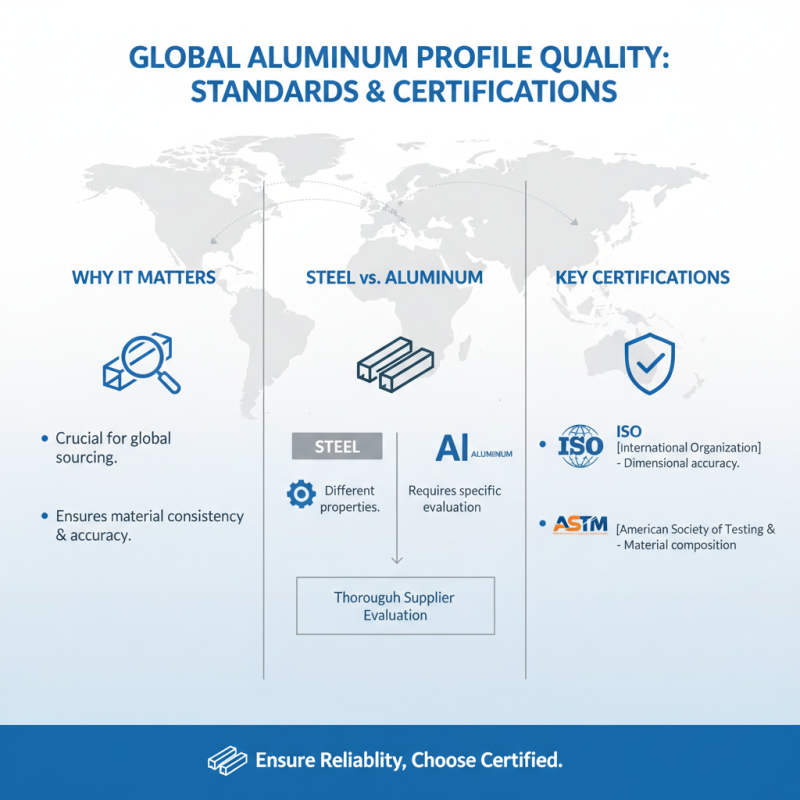
When sourcing aluminum profiles globally, understanding quality standards and certifications is crucial. Steel and aluminum differ greatly in properties, which makes it essential to evaluate suppliers thoroughly. Look for profiles that meet international standards such as ISO or ASTM. These certifications ensure dimensional accuracy and material consistency.
Many manufacturers display certification logos prominently, yet not all do so genuinely. It’s wise to request documentation directly from the supplier. Ask for results from independent testing labs. Sometimes, suppliers provide misleading information without proper validation. Therefore, conducting your own quality assessments can provide peace of mind.
You might encounter variations in production processes. Some manufacturers may adhere to strict standards while others might not. Inconsistent practices can lead to unreliable products. Relying solely on certifications can be a gamble. Engaging a third-party inspection service can further guarantee that the products meet required benchmarks. It's all about taking extra precautions and being aware that what looks good on paper may not always translate into real-world quality.
Cost-Effective Strategies for Shipping and Logistics of Aluminum Profiles
When sourcing aluminum profiles globally, shipping and logistics are crucial factors to consider. Efficient logistics can dramatically reduce costs. One effective strategy is to consolidate shipments. Smaller shipments often incur higher freight costs. By batching orders, you can maximize container use and enjoy bulk shipping rates.
Selecting the right shipping method is essential. Air freight is faster but can be expensive. Sea freight is cost-effective, though it takes longer. Always assess deadlines and budget constraints. Customizing your shipping route can also lead to savings. Research alternative ports that may offer better rates or shorter transit times.
Communication with suppliers is critical. Ensure they understand your logistics requirements. Miscommunication can lead to delays or unexpected fees. Utilize tracking tools to monitor shipments in real-time. This adds a layer of reliability to your process. However, be prepared for potential hiccups. Delays can happen, and having a contingency plan is wise. Observing these strategies can lead to improved shipping efficiency and cost savings.









 wechat