Top 10 Aluminum Alloy Profiles for Global Buyers?
In today's competitive market, selecting the right Aluminum Alloy Profiles is crucial for various industries. These profiles serve essential functions in construction, transportation, and manufacturing. Understanding the top choices can significantly influence project success and efficiency.
Aluminum Alloy Profiles offer lightweight strength and corrosion resistance. They are favored for their versatility and adaptability in design. Choosing the right profile can enhance structural integrity and reduce overall costs. However, not all profiles are suitable for every application. This requires careful evaluation of their properties and performance standards.
As global buyers explore these materials, quality and sourcing reliability become paramount. Manufacturers must establish their credibility and provide detailed specifications. It’s essential to remain informed about the most trusted suppliers and innovations in Aluminum Alloy Profiles. This ensures that projects meet both safety and performance requirements while avoiding potential pitfalls in material selection.
Overview of Aluminum Alloys Used in Profile Manufacturing
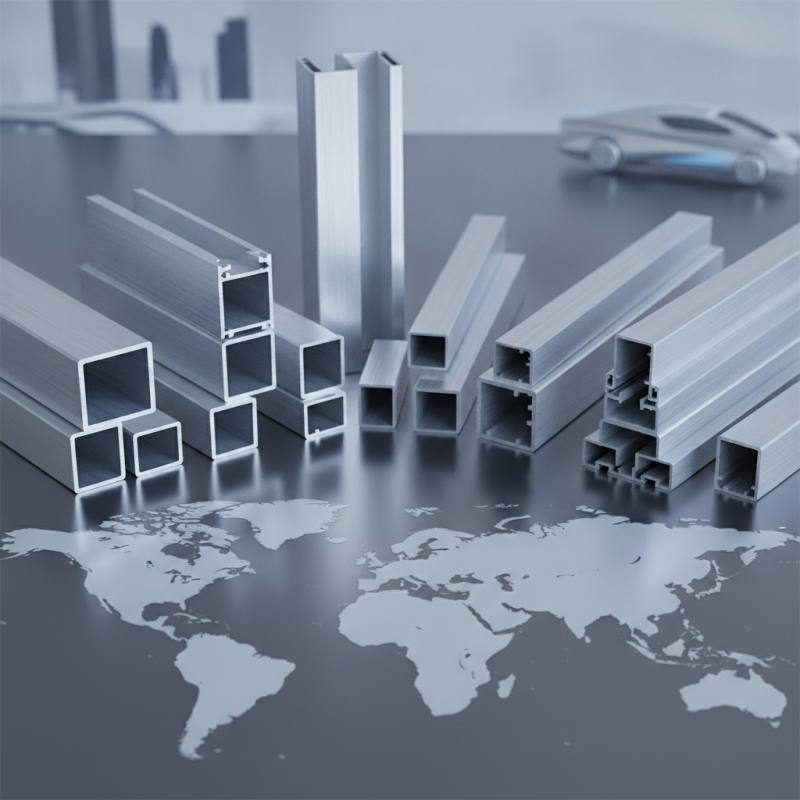
Aluminum alloys play a crucial role in profile manufacturing. These materials are favored for their light weight, strength, and versatility. Profiles made from aluminum alloys can be found in various sectors, including construction, automotive, and aerospace. Each alloy brings unique properties to the table, making them suitable for specific applications.
When choosing aluminum alloys, it's essential to understand their characteristics. For instance, some alloys offer excellent corrosion resistance, while others provide superior machinability. Temper or heat treatment also affects the alloy's final properties. This knowledge can significantly impact the performance of the final product.
**Tip**: Always assess the end-use of the profile. This can guide your selection of the right alloy. Consider factors like weight tolerance and exposure to environmental elements.
The right aluminum alloy can enhance durability and performance, but not all profiles are created equal. Each industry might prefer different alloys based on specific demands. It’s crucial to stay informed about the latest advancements in alloy technology. This reflection can help in making better choices.
**Tip**: Keep an eye on industry trends. Doing so can reveal newer alloys with improved performance metrics.
Key Properties of Popular Aluminum Alloy Profiles
Aluminum alloys are widely recognized for their unique properties. They offer excellent strength-to-weight ratios, making them ideal for various applications. These alloys are often used in construction, automotive, and aerospace sectors due to their durability and lightweight nature. The ability to resist corrosion further enhances their appeal. In environments prone to moisture, aluminum alloys stand strong, providing longevity to structures and vehicles alike.
Understanding the key properties of popular aluminum alloy profiles is crucial for buyers. For instance, 6061 alloy, noted for its versatility, is often used in structural components. Its weldability makes it a favorite among fabricators. Another notable profile, 7075, is known for its high strength, commonly seen in aerospace applications. However, users must be cautious about its decreased workability compared to other alloys.
A choice like 2024 highlights the balance between strength and weight, often favored in military aircraft. However, buyers need to be mindful of its susceptibility to corrosion. Each alloy serves distinct needs while presenting unique challenges. Recognizing these nuances is vital for making informed decisions in purchasing aluminum alloys.
Top Applications for Aluminum Alloy Profiles in Various Industries
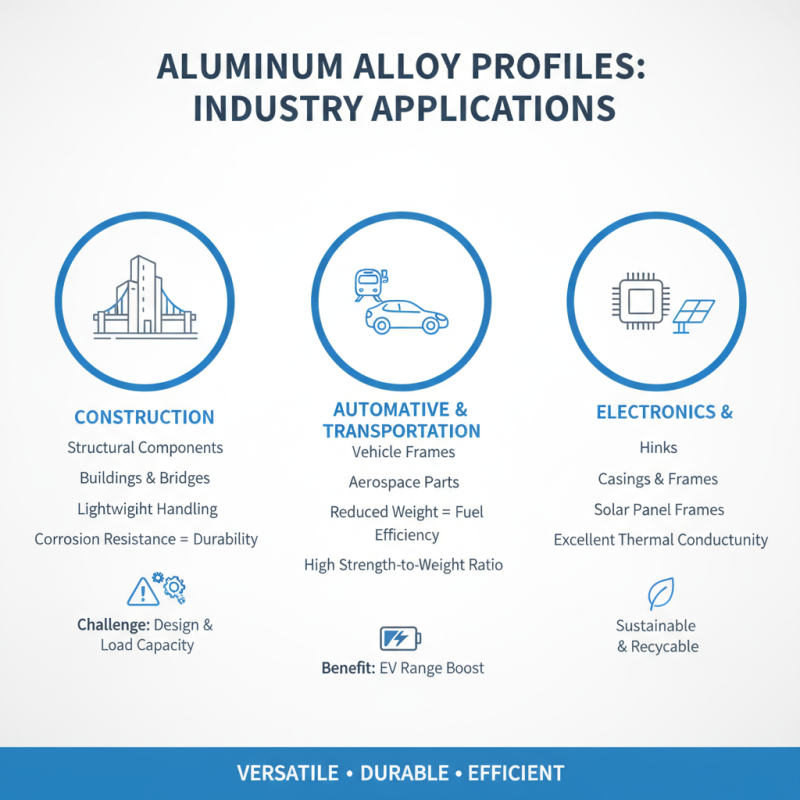
Aluminum alloy profiles are versatile and widely used in various industries. In the construction sector, they serve as structural components for buildings and bridges. Their lightweight nature allows for easier handling and transport. The corrosion resistance of aluminum enhances durability. However, ensuring proper design and load-bearing capacity remains a challenge.
In the automotive industry, aluminum profiles contribute to vehicle lightweighting, improving fuel efficiency. They are used in frames, body panels, and engine components. Yet, achieving the right balance of strength and weight can be difficult. Poorly engineered components might compromise safety.
The electronics industry also benefits from aluminum alloy profiles. They are employed in housing for devices and heat sinks. The thermal conductivity of aluminum helps dissipate heat effectively. However, manufacturers must address issues related to electromagnetic interference. This requires careful consideration in design and application.
Criteria for Selecting the Best Aluminum Alloy Profiles
When selecting the best aluminum alloy profiles, buyers should consider several crucial criteria. First, the intended application must align with the alloy's properties. For instance, while some alloys excel in strength, others focus on corrosion resistance. According to the Aluminum Association, alloys in the 6000 series are often favored for their excellent corrosion resistance and good mechanical properties. Understanding the specific requirements of your project helps narrow down suitable profiles.
The manufacturing process also plays a significant role. Extrusion techniques can influence the final product's strength and finish. Research indicates that profiles produced through advanced extrusion techniques typically have higher precision and uniformity. This can directly affect durability and performance. Remember, not all manufacturing processes guarantee the same quality, which underscores the need for reliable suppliers.
Tips: Always request samples before making large purchases. This allows for hands-on evaluation of the material. Additionally, consider the alloy's lifecycle, as sustainability is a growing concern among buyers. The Aluminum Association reports that aluminum can be recycled indefinitely without losing quality, making it a wise choice for eco-conscious industries.
Top 10 Aluminum Alloy Profiles for Global Buyers
Global Trends in Aluminum Alloy Profile Production and Trade
The aluminum alloy profile market is witnessing significant changes. Production rates are climbing globally. According to a recent report by the Aluminum Association, global production reached over 60 million tons in 2022. Demand remains strong across various industries, from construction to transportation.
In trade, the trends are shifting. Emerging markets are increasingly importing aluminum profiles, seeking lightweight materials for their infrastructure projects. The International Trade Centre noted a 15% rise in exports from key producers in Asia. However, fluctuating raw material costs pose challenges for manufacturers. Companies must adapt to maintain competitive pricing while ensuring quality.
Sustainability is another focal point. Many firms are exploring eco-friendly production methods. Recycled aluminum is gaining traction, reducing environmental impact. A recent sustainability survey revealed that over 70% of industry leaders prioritize green initiatives. Such changes will shape future production strategies. The market is dynamic, and firms must stay ahead to thrive.
Top 10 Aluminum Alloy Profiles for Global Buyers
| Rank |
Profile Type |
Common Uses |
Region of High Demand |
Market Share (%) |
| 1 |
6061 |
Automotive, Aircraft, Marine |
North America, Europe |
25% |
| 2 |
6063 |
Architectural Applications, Windows |
Asia-Pacific, Europe |
20% |
| 3 |
6082 |
Structural Applications |
Europe, North America |
15% |
| 4 |
7075 |
Aerospace Components |
North America, Asia |
10% |
| 5 |
2024 |
Transport Structures |
Europe, Asia |
8% |
| 6 |
7079 |
High Strength Applications |
North America, Europe |
7% |
| 7 |
4045 |
Heat Exchangers |
Asia, Europe |
6% |
| 8 |
3003 |
Chemical Equipment, Cooking Utensils |
North America, Asia |
5% |
| 9 |
1100 |
Food and Chemical Handling |
Europe, Asia |
4% |
| 10 |
5005 |
Architectural Applications, Reflectors |
North America, Europe |
3% |








 wechat