How to Choose Aluminum Alloy Profiles for Your Project?
Choosing the right materials for a project is crucial. Aluminum Alloy Profiles often stand out for their versatility. They offer lightweight durability and resistance to corrosion.
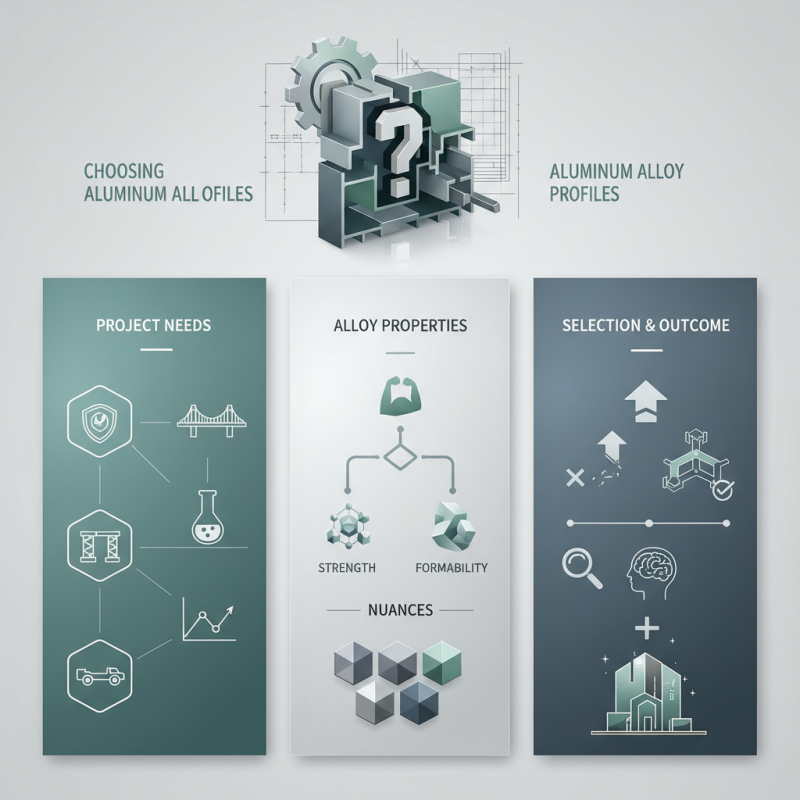
When selecting these profiles, consider the project's specific needs. Different alloys have distinct properties. For instance, some may provide excellent strength while others excel in formability. It's important to understand these nuances.
Not all aluminum alloys are created equal. Some choices may lead to unexpected challenges. Ensure you assess your project requirements thoroughly. Reflecting on past projects can help you avoid common pitfalls. The right Aluminum Alloy Profiles can make a significant difference in your outcome.
Understanding Aluminum Alloy Profiles and Their Applications
Aluminum alloy profiles are essential in various industries due to their versatility. These materials are lightweight yet strong, making them ideal for construction, automotive, and aerospace applications. According to industry reports, the global aluminum alloy market is projected to reach $120 billion by 2027, reflecting a steady demand for innovative profiles. Understanding the specific properties of aluminum alloys helps in selecting the right profile for each project.
Different aluminum alloys have varying characteristics. For instance, 6061 aluminum is known for its excellent corrosion resistance, making it suitable for marine environments. On the other hand, 7075 aluminum offers high strength, although it may not perform as well in corrosive conditions. These details are crucial in project planning. As engineers, we often focus on elements like strength and weight, sometimes at the cost of long-term performance.
In applications like automotive manufacturing, the choice of aluminum profile can influence fuel efficiency directly. A report by the Aluminum Association noted that lightweighting vehicles with aluminum leads to up to a 30% increase in fuel efficiency. Yet, not every alloy fits every need. Poorly matched profiles can lead to structural failures. This creates a need for careful evaluation and often, reconsideration of choices made early in the design process.
Key Factors to Consider When Selecting Aluminum Alloys
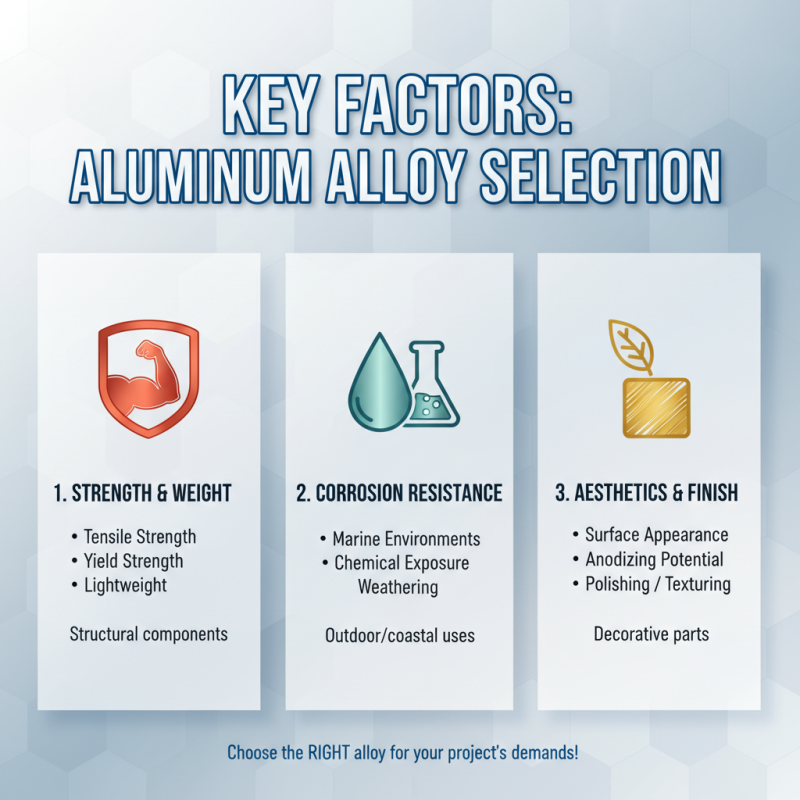
Choosing the right aluminum alloy profiles is crucial for any project. The type of alloy affects strength, weight, and corrosion resistance. It’s essential to understand what your project demands. For instance, structural applications may require alloys with higher tensile strength. Decorative projects might prioritize aesthetics over raw strength.
Consider the environment where the aluminum will be used. Will it face moisture or harsh chemicals? Some alloys offer better resistance to these conditions. Also, think about thermal conductivity. It varies significantly among aluminum types, which can impact energy efficiency. Moreover, assess the alloy's machinability for your manufacturing process. Some aluminum profiles are easier to shape than others.
Remember, not all alloys are created equal. You may find that an alloy that excels in one area falls short in another. Balancing these factors often requires reflection and assessment of trade-offs. Perhaps the alloy you choose won’t meet every need but may still perform adequately. Embrace the complexity of your choices; it often leads to better results.
Comparing Different Types of Aluminum Alloys for Your Needs
When choosing aluminum alloys for your project, understanding the various types is crucial. Aluminum alloys come in two main categories: wrought and cast. Wrought alloys are processed by mechanical means, while cast alloys are shaped via melting. Each type has unique properties that make them suitable for different applications.
For example, 6061 aluminium is known for its versatility. It is lightweight yet strong. This alloy is ideal for structural components, lack of excessive weight is a benefit here. Meanwhile, 7075 aluminium offers extreme strength, often used in aviation. Consider the environment, as some alloys corrode faster than others. It is important to assess durability based on your project needs.
**Tip:** Always factor in weight versus strength. Striking a balance can make a difference.
When comparing aluminum alloys, think about thermal resistance and anodizing capabilities. Alloys like 6063 offer excellent finishes for aesthetic purposes. However, 5052 can better withstand marine conditions. Each alloy's unique properties must reflect your project's demands.
**Tip:** Test small samples before committing. This step can prevent costly mistakes. Taking time to analyze your options pays off in the long run.
How to Choose Aluminum Alloy Profiles for Your Project?
| Aluminum Alloy Type |
Strength (MPa) |
Weight (g/m) |
Corrosion Resistance |
Weldability |
Cost ($/kg) |
| 6061 |
240 |
2.70 |
Good |
Excellent |
3.00 |
| 6063 |
230 |
2.70 |
Good |
Good |
3.20 |
| 7075 |
570 |
2.81 |
Moderate |
Poor |
5.00 |
| 2024 |
450 |
2.78 |
Moderate |
Poor |
4.50 |
| 5005 |
190 |
2.70 |
Excellent |
Good |
3.10 |
Tips for Sourcing Quality Aluminum Alloy Profiles
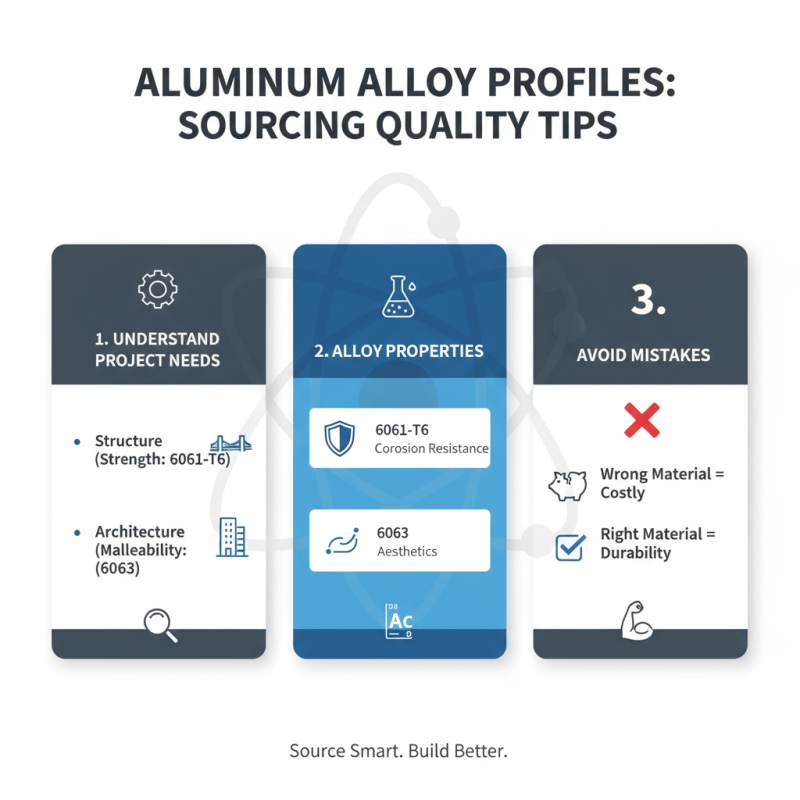
When sourcing quality aluminum alloy profiles, start by understanding the specific requirements of your project. Different alloys have varying properties. For instance, 6061-T6 is known for its strength and corrosion resistance, making it ideal for structural applications. In contrast, 6063 is more malleable, suited for architectural needs. Knowing these distinctions can prevent costly mistakes.
Research into market trends shows that the demand for aluminum profiles is set to rise by 6% annually over the next five years. This growth makes it crucial to choose suppliers carefully. Look for manufacturers that provide certifications. Choose profiles that meet your design specifications, especially for mechanical and thermal properties. This approach minimizes risks associated with performance failures.
Additionally, consider the fabrication process. Some profiles may require special handling or additional treatments. Keep in mind that not all suppliers offer the same level of quality. Some may cut corners in material sourcing or fabrication. Failure to notice these aspects can lead to serious project setbacks, both in terms of time and costs. Assessing a supplier's reputation is essential. Compare reviews and seek out industry feedback for quality assurance.
Common Mistakes to Avoid When Choosing Aluminum Alloys
Choosing the right aluminum alloy for your project is crucial. Many people overlook critical factors. One common mistake is not considering the environment where the alloy will be used. For example, certain alloys can corrode quickly in salty conditions. According to industry reports, over 25% of aluminum failures are due to improper alloy selection.
Another pitfall is ignoring the mechanical properties of the aluminum. Not all alloys have the same strength or ductility. Some applications require high strength but also a degree of flexibility. Neglecting these factors can lead to project failures. Always check tensile strength and yield strength data in specifications. Inadequate knowledge here can result in cost overruns.
Tip: Consult with suppliers about the best alloys for your specific conditions. They often have valuable insight based on real-world experiences.
While it’s easy to focus on price, don’t let that drive your decision-making. Cheaper alloys may not perform as expected. This can lead to expensive repairs or replacements later. Evaluate the long-term costs of materials against short-term savings.
Tip: Test samples before making large orders. This helps in understanding how the alloy performs in your specific application. Remember, informed choices lead to better outcomes.









 wechat