


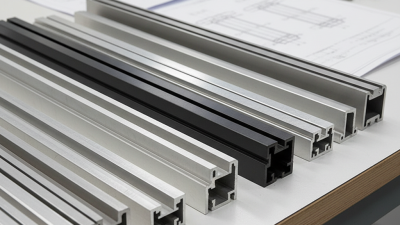
Aluminum Moulding Profiles are shaped components used to create clean edges, protective borders, and precise transitions. They appear in homes, commercial interiors, workshops, and industrial assemblies. A profile may frame a glass panel, cover a floor joint, or finish a cabinet edge.
Their value comes from aluminum’s practical balance of strength, weight, and corrosion resistance. Many profiles are anodized or powder-coated for improved surface protection. Some have brushed finishes that suit modern interiors. Others remain functional and plain. The correct choice depends on dimensions, load, moisture, and installation conditions.
In construction, these profiles protect vulnerable edges from impact and daily wear. They also conceal uneven cuts between tiles, panels, flooring, and walls. In manufacturing, engineers use them for machine guards, enclosures, display systems, and modular frames. A narrow trim can hide a joint. A reinforced section can support a larger panel.
Installation quality matters as much as the extrusion itself. Poor measurements can leave visible gaps at corners. Sharp edges may also require careful deburring before handling. These details are easy to overlook.
Not every aluminum profile suits every project. Thin decorative trim may fail under repeated impact. A stronger section could be unnecessary for a lightweight interior panel. Reviewing drawings, tolerances, finish requirements, and fixing methods helps prevent costly adjustments.
This guide examines common applications, selection factors, finishing options, and installation considerations. It also recognizes a practical truth. A profile can look perfect but still perform poorly when its dimensions or environment are misunderstood.
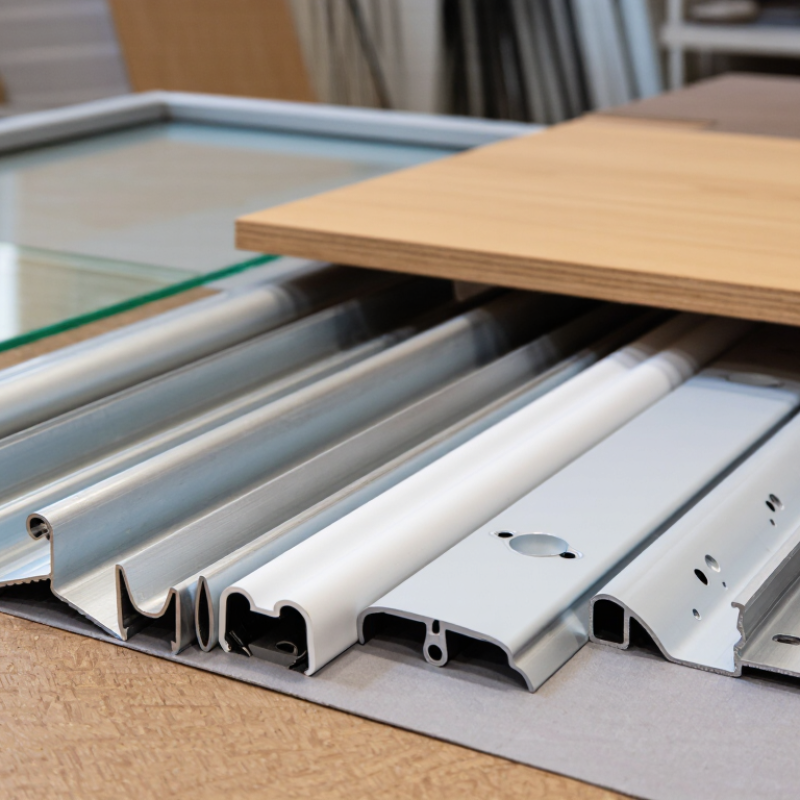
An aluminum moulding profile is a shaped strip made from aluminum, usually produced through an extrusion process. Heated aluminum is pressed through a precision die to create a continuous section. This section may have a straight edge, rounded face, channel, or decorative contour. It can then be cut, drilled, anodized, painted, or polished for a specific project.
In practical building work, moulding profiles cover exposed edges and create cleaner transitions between surfaces. They are used around doors, ceilings, floors, wall panels, cabinets, and furniture. For example, a narrow profile can protect the edge of a tile, while a wider section can hide a joint between two panels. Aluminum is useful because it is lightweight, corrosion-resistant, and easy to machine. It also keeps a stable shape under normal indoor conditions.
One detail is often missed. A profile is not automatically suitable for every installation. Its wall thickness, alloy, finish, and fixing method must match the environment. A thin decorative section may bend during transport or installation. I have seen clean designs fail because the corner was measured poorly. Small gaps also become obvious under bright lighting. Good results depend on accurate measurements, suitable fasteners, and careful handling. Moisture, temperature changes, and expected impact should be considered before selecting the profile. Some projects need a stronger section than appearance alone suggests.
| Application Area | Typical Profile Type | Primary Function | Common Material or Finish | Typical Dimensions or Range | Key Performance Benefits |
|---|---|---|---|---|---|
| Wall and Ceiling Trim | Angle, L-shaped, U-shaped, and shadow-gap profiles | Cover exposed edges, create clean transitions, and form decorative or recessed joints | 6063 aluminum alloy; anodized, powder-coated, or mill finish | Leg lengths commonly range from 15–50 mm; thickness often ranges from 0.8–3.0 mm | Lightweight, corrosion resistant, easy to cut, and suitable for interior finishing |
| Flooring and Tile Edges | Tile edging, T-shaped transition, and reducer profiles | Protect flooring edges and provide a smooth transition between different floor levels or materials | Decorative anodized or powder-coated aluminum | Visible face widths commonly range from 8–30 mm; transition heights often range from 6–20 mm | Reduces chipping, improves safety, and provides a durable finishing edge |
| Door and Window Systems | Frame, glazing bead, sill, threshold, and reinforcement profiles | Form structural frames, hold glazing, guide seals, and support doors or windows | 6063 alloy for extruded architectural sections; 6061 may be used where higher strength is required | Profile depths commonly range from 25–100 mm, depending on the frame system | Good strength-to-weight ratio, dimensional stability, weather resistance, and low maintenance |
| Cabinet and Furniture Trim | Edge trim, handle profile, corner protector, and recessed grip profile | Protect panel edges, provide integrated handles, and improve the appearance of cabinets and furniture | Anodized, brushed, polished, or powder-coated aluminum | Visible widths commonly range from 10–40 mm; wall thickness often ranges from 1–2.5 mm | Creates a clean modern appearance and withstands frequent handling and cleaning |
| Glass and Partition Systems | Base channel, cover cap, mullion, transom, and corner profile | Secure glass panels and create modular office, shower, retail, or interior partitions | 6063 aluminum alloy with anodized or powder-coated surface treatment | Channels commonly accommodate glass thicknesses of 6–12 mm; larger systems may support thicker panels | Fast installation, corrosion resistance, clean alignment, and compatibility with sealants and gaskets |
| LED Lighting | Surface-mounted, recessed, corner, and pendant LED channels | Hold LED strips, diffuse light, conceal wiring, and assist with heat dissipation | Extruded aluminum with a polycarbonate diffuser and anodized or powder-coated finish | Common channel widths range from 10–60 mm; lengths are often supplied in 1–3 m sections | Improves heat transfer from LED strips, protects components, and produces an even lighting line |
| Solar Panel Mounting | Rail, end clamp, mid clamp, splice, and mounting channel | Support photovoltaic modules and attach them to rooftops or ground-mounted structures | 6063-T5 or similar heat-treated aluminum extrusion; corrosion-resistant fasteners are typically used | Rail heights commonly range from 30–50 mm; dimensions depend on span, load, and mounting method | Low structural weight, outdoor corrosion resistance, easy assembly, and adjustable module positioning |
| Industrial Frames and Guards | T-slot profile, square tube, channel, and machine guarding profile | Build workstations, equipment frames, safety guards, conveyors, and modular enclosures | 6061 or 6063 aluminum alloy; mill, anodized, or powder-coated finish | Common T-slot series include approximately 20 × 20 mm, 30 × 30 mm, 40 × 40 mm, and 45 × 45 mm | Modular assembly, reusable connections, good rigidity, and no welding required for many designs |
| Automotive and Transportation Trim | Decorative strip, sill trim, edge guard, and structural reinforcement profile | Protect edges, reduce component weight, and provide decorative or functional finishing details | Heat-treated aluminum alloys with anodized, painted, or powder-coated surfaces | Profile dimensions vary widely; decorative strips are often 10–50 mm wide and 1–3 mm thick | Lightweight construction, vibration resistance, corrosion protection, and consistent appearance |
| Heat Dissipation | Heat sink, finned profile, and mounting plate extrusion | Transfer heat away from LED modules, power electronics, motors, and control equipment | High-thermal-conductivity aluminum alloy; usually supplied with a bare, anodized, or black anodized surface | Fin height and spacing are designed according to thermal load; common base thicknesses range from 2–10 mm | High thermal conductivity, large surface area, low weight, and efficient passive cooling |
| Outdoor Construction | Fascia, coping, drip edge, corner, and cladding support profile | Direct water away from surfaces, protect exposed edges, and support exterior cladding or panels | Weather-resistant anodized or powder-coated aluminum | Common face widths range from 20–100 mm; thickness often ranges from 1–3 mm | Resists moisture, ultraviolet exposure, and corrosion while requiring minimal maintenance |
| Installation and Fabrication | Flat bar, round bar, square tube, channel, and custom extrusion | Provide structural support, spacers, brackets, covers, and custom finishing components | 6061 or 6063 aluminum alloy selected according to strength and appearance requirements | Standard stock sizes vary from small trims below 10 mm to large sections above 100 mm | Can be machined, drilled, cut, bent, anodized, or powder-coated for project-specific requirements |



 wechat
