Choosing the right Architectural Aluminum Profiles begins with performance, not appearance. A slim frame may look elegant, yet it can underperform beside a busy road or coastal window. The International Aluminium Institute reports that aluminium demand could nearly double by 2050, driven partly by construction and transport. This growth increases material choices, but it also raises scrutiny over energy use, recycled content, and durability.
A façade is more than a skin. As façade researcher Ulrich Knaack explains, it is “the building’s interface with the environment.” That idea matters when comparing alloy grades, wall thickness, thermal breaks, drainage paths, finishes, and connection methods. The International Energy Agency identifies primary aluminium as a significant industrial emissions source. Therefore, a responsible specification should examine recycled content, smelter emissions, Environmental Product Declarations, and expected service life. Ask for evidence.
Small decisions become visible later. A poorly designed drainage channel may stain a pale façade. An undersized mullion may flex under wind pressure. A dark powder coating can absorb intense solar heat. These details deserve calculations, not assumptions. European Aluminium guidance and project-specific structural standards can support those checks, but no generic report replaces a qualified engineer’s review.
The perfect profile does not exist. Trade-offs remain. Lower weight can reduce material use, but it may limit span or rigidity. Higher thermal performance can increase system complexity and cost. This guide compares those realities, including alloy selection, fabrication tolerance, thermal efficiency, corrosion resistance, sustainability data, and supplier reliability. The goal is practical judgment. Choose evidence over polished samples.
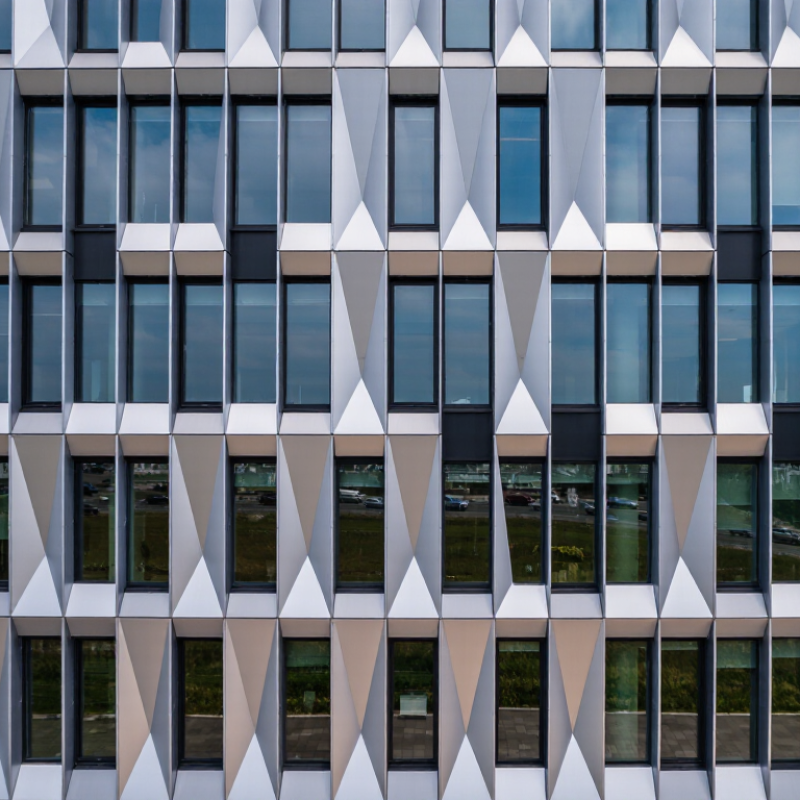
Choosing the right architectural aluminum profiles starts with defining the building’s actual needs. A residential window wall may prioritize thermal insulation and slim sightlines. A commercial façade may require higher wind resistance, drainage capacity, and controlled movement. Write these requirements before comparing profile shapes.
Measure opening sizes, spans, exposure, and connection points on site. Note nearby roads, coastal air, heavy rain, and strong sunlight. These details influence alloy selection, coating durability, and maintenance intervals. Ask the structural engineer to confirm wind loads, dead loads, deflection limits, and local code requirements. A profile that looks strong may still perform poorly if its joints are weak.
Thermal performance also deserves careful attention. Use profiles with suitable polyamide barriers where energy efficiency matters. Check frame depth, glass weight, gasket compatibility, and installation tolerances together. Fabricators should review cutting accuracy, corner treatment, drainage paths, and fastener placement before production. Small errors become visible at the finished façade.
Do not choose by appearance alone. A narrow profile may reduce visual weight, but it can limit glass size or hardware options. I would also question early assumptions about “standard” dimensions. They often change after a site survey. Request test data, coating specifications, and documented performance results from qualified suppliers. Compare the evidence against the project brief, not against attractive samples.
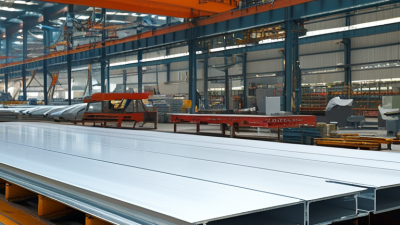
Choosing an architectural aluminum profile starts with alloy, grade, and temper. Alloy controls chemistry; temper controls strength. The profile shape then decides how efficiently that strength resists bending.
For common extrusions, 6063-T5 offers clean surfaces and easy forming. Its typical yield strength is about 145 MPa under EN 755-2 data. 6061-T6 is stronger, often near 240 MPa yield strength, according to ASTM B221-based engineering values. It suits brackets, frames, and longer spans. However, a thicker wall or deeper rib may outperform a stronger alloy with poor geometry. That detail is easy to overlook.
The Aluminum Association’s Aluminum Design Manual stresses section properties, buckling, connection design, and load combinations. Do not select profiles from alloy tables alone. Check deflection under wind, self-weight, and repeated movement. Eurocode-based design commonly limits visible beam deflection near span/250, but project specifications may require stricter limits. A neat chart can mislead.
Tips: Request mill certificates and temper verification. Compare moment of inertia, not only tensile strength. Ask for corrosion exposure data near coastlines. Use 6063 for appearance-led profiles, and consider 6061 when structural demand dominates. Remember that anodizing improves surface durability, not core strength. IAI reports that recycled aluminum requires roughly 5% of the energy used for primary production, so recycled content can support lower-impact design. Yet recycled chemistry may vary. Verify it.
Comparison of commonly used wrought aluminum alloys for architectural extrusions. Mechanical values are indicative minimum or typical values for the listed temper and can vary with product standard, wall thickness, section geometry, and heat treatment.
| Alloy and Temper | Typical Ultimate Tensile Strength | Typical Yield Strength | Elastic Modulus | Density | Extrudability | Corrosion Resistance | Anodizing and Surface Finishing | Weldability | Recommended Architectural Applications | Profile Strength Assessment |
|---|---|---|---|---|---|---|---|---|---|---|
| 6060-T5 | 150–180 MPa | 90–140 MPa | Approximately 69 GPa | Approximately 2.70 g/cm³ | Excellent | Very good atmospheric corrosion resistance | Very good for anodizing and architectural finishes; generally gives a uniform appearance | Good; heat-affected zones lose strength after welding | Light-duty frames, interior partitions, trims, decorative sections, and simple curtain-wall components | Best suited to lightly loaded profiles where surface quality and complex extrusion shape are more important than maximum strength |
| 6063-T5 | 150–180 MPa | 110–145 MPa | Approximately 69 GPa | Approximately 2.70 g/cm³ | Excellent | Very good atmospheric corrosion resistance | Excellent for anodizing, powder coating, and polished architectural surfaces | Good; welded areas should be checked for reduced mechanical strength | Window and door frames, curtain-wall members, handrails, partitions, and general architectural extrusions | A widely used architectural grade offering a strong balance of appearance, corrosion resistance, formability, and moderate strength |
| 6063-T6 | 190–215 MPa | 160–175 MPa | Approximately 69 GPa | Approximately 2.70 g/cm³ | Very good | Very good atmospheric corrosion resistance | Very good for anodizing and powder coating; finish quality remains a major advantage | Good; post-weld strength reduction must be considered in design | Higher-load window and door systems, stronger curtain-wall components, skylights, and architectural framing | Provides higher strength than 6063-T5 while retaining excellent extrudability and surface quality |
| 6005A-T6 | 260–290 MPa | 220–250 MPa | Approximately 69 GPa | Approximately 2.70 g/cm³ | Good | Good to very good atmospheric corrosion resistance | Good for anodizing and coating; appearance may be slightly less uniform than highly surface-oriented 6063 | Good; welding reduces strength in the heat-affected zone | Load-bearing frames, larger mullions, structural glazing support members, platforms, and rails | A practical choice when an architectural extrusion requires more strength than 6063 but still needs good extrudability |
| 6061-T6 | 290–315 MPa | 240–275 MPa | Approximately 69 GPa | Approximately 2.70 g/cm³ | Good | Good atmospheric corrosion resistance; less corrosion-resistant than 6063 in some exposed conditions | Good for anodizing and powder coating; cosmetic anodizing may require tighter process control | Good; the welded heat-affected zone should be designed using reduced properties | Structural frames, heavy-duty supports, brackets, access systems, bridges, and mechanically loaded profiles | A strong and versatile grade for structural architectural components, especially where load capacity is more important than the most complex extrusion shape |
| 6082-T6 | 290–340 MPa | 250–310 MPa | Approximately 69 GPa | Approximately 2.71 g/cm³ | Moderate to good | Good atmospheric corrosion resistance | Suitable for powder coating and anodizing; decorative anodized uniformity may be less consistent than 6063 | Good; welded zones require careful structural verification | Heavy-duty architectural supports, structural trusses, walkways, platforms, and high-load framing | Among the strongest commonly extruded architectural options, suitable for demanding load-bearing applications when extrusion complexity is manageable |
Design note: Profile strength depends on more than alloy grade. Engineers should also evaluate section modulus, moment of inertia, wall thickness, unsupported span, connection details, buckling, deflection limits, temperature effects, and applicable building codes. Increasing the temper from T5 to T6 generally improves strength, but it does not change the elastic modulus significantly. For welded assemblies, use the applicable reduced properties in the heat-affected zone rather than the parent-metal T6 values.
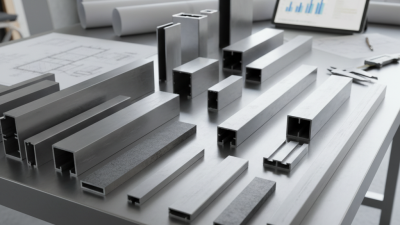
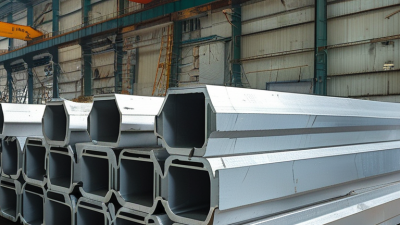
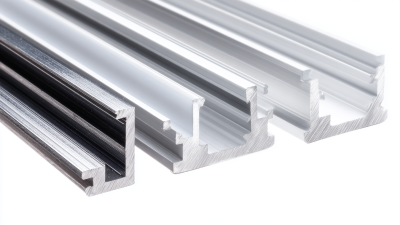
Choosing the right architectural aluminum profile starts with the profile shape. A square tube suits clean partitions and light framing. A channel profile works well for edge support and sliding components. T-shaped profiles can connect panels while keeping the visible surface narrow. I have seen projects use attractive shapes that later trapped water or blocked fasteners. Appearance should support installation, not complicate it.
Dimensions must match the real load and span. Measure the opening, panel weight, fixing points, and expected deflection. A deeper profile usually improves stiffness more efficiently than simply adding width. For example, a 60 mm deep section may resist bending better than a wider, shallow section. Check the manufacturer’s section properties and allowable tolerances. Small errors matter.
Wall thickness also affects strength, weight, machining, and cost. Thin walls reduce material use but may dent during transport or pull around screws. Thick walls provide better fastening support, yet they add weight and may complicate cutting. For a frequently handled door frame, I would examine screw engagement and local stress around hinges. For a decorative cover, that same thickness may be unnecessary. There is no universal best profile. My own mistake has been choosing by appearance before checking the connection details. Review drainage, thermal movement, corrosion exposure, and assembly access before approving the final section.
Evaluating Surface Finishes, Thermal Performance, and Durability
Surface finish affects appearance, maintenance, and service life. Anodizing creates a hard oxide layer that preserves the metal’s texture and resists moderate abrasion. Powder coating offers broader color choices and stronger visual consistency across large elevations. However, finish quality depends on pretreatment, coating thickness, curing, and drainage design. A sample may look excellent. The installed façade may age differently.
Thermal performance requires more than choosing an aluminum alloy. Aluminum conducts heat quickly, so profiles for conditioned buildings often need a thermal break. Polyamide insulating strips can reduce heat transfer between interior and exterior sections. Check the complete window or façade system, not only the profile. Frame depth, glass selection, gaskets, fasteners, and installation gaps influence the final U-value. Small gaps matter.
Durability should match the exposure. Coastal air, industrial pollutants, strong sunlight, and freeze-thaw cycles can challenge both metal and finish. Ask for documented testing, coating specifications, and corrosion-resistance data. ISO-based test reports can improve confidence, but laboratory results cannot reproduce every building site. Regular inspection still matters. Look for blocked drainage holes, damaged coatings, and loose seals. A darker finish may absorb more solar heat, while a poor thermal design can create interior condensation. I would not treat appearance as proof of performance; it is only the first visible clue.
Standards Choosing the right architectural aluminum profile starts with standards, not appearance. Confirm the alloy, temper, dimensions, surface treatment, and load requirements. Ask for current certificates and independent test reports when safety matters. Standards differ between markets, so copied documents may not fit your project. Check tolerances carefully. A profile can look precise but fail during assembly.
Fabrication Fabrication options also shape the final result. Discuss cutting accuracy, CNC machining, drilling, bending, welding, and connection methods before ordering. Share detailed drawings with hole positions and installation clearances. Small errors can become visible gaps around doors or curtain wall panels. Request production samples. They reveal sharp edges, coating differences, and difficult joints better than a spreadsheet. No checklist is perfect. Your design may still need revision after the first sample.
Tips: Visit the supplier’s facility if possible. Review material traceability, quality records, packaging, and maintenance routines. Ask how rejected profiles are handled. Confirm lead times in writing, including tooling and replacement stock. Reliable suppliers explain problems early instead of hiding delays. Check communication during a small trial order. Fast replies are useful, but technical answers matter more. A supplier with strong equipment may still be unsuitable if documentation is weak. Keep one approved sample for future comparison.