One Stop Solution For Aluminum Profiles
调查
表单加载...

Why Choose Aluminum Corner Extrusion Profiles?

Aluminum Corner Extrusion Profiles deserve closer attention as manufacturers seek lighter, stronger, and more adaptable structural components. Their L-shaped geometry supports clean 90-degree joins, protective edges, cabinet frames, machine guards, and modular displays. A profile can replace several cut-and-welded parts, reducing assembly time and visible seams.

Market evidence supports this interest. Grand View Research’s Aluminum Extrusion Market Size, Share & Trends Analysis Report forecasts continued global growth through 2030, driven by construction, transport, electronics, and renewable-energy applications. The International Aluminium Institute also reports aluminum’s strong recycling advantage, because recycled aluminum requires far less energy than primary production. However, recycled content, alloy selection, and surface treatment still require verification.

Small details matter.

According to Tom Dobbins, President and CEO of the Aluminum Extruders Council, “Aluminum extrusion provides designers with an almost unlimited number of shapes and configurations.” This principle explains why Aluminum Corner Extrusion Profiles remain useful beyond simple edging. Engineers can specify channels, fastening slots, radiused corners, or custom wall thicknesses within one extrusion design.

Still, the choice is not automatically correct. Poor tolerances may create loose joints. An unsuitable alloy may deform under load. Weak anodizing can show scratches around drilled holes. These practical failures deserve attention.

This article examines why designers choose Aluminum Corner Extrusion Profiles, including strength-to-weight performance, corrosion resistance, fabrication efficiency, finish options, and lifecycle value. It also questions where standard profiles fall short, because reliable specification requires more than attractive geometry.
Why Choose Aluminum Corner Extrusion Profiles?

What Are Aluminum Corner Extrusion Profiles?

Why Choose Aluminum Corner Extrusion Profiles?

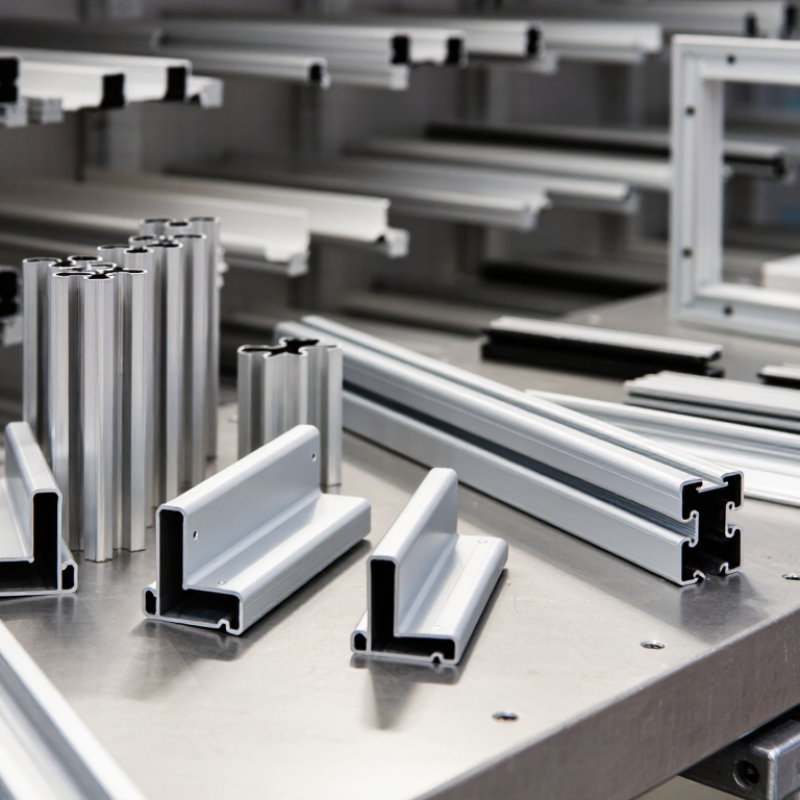
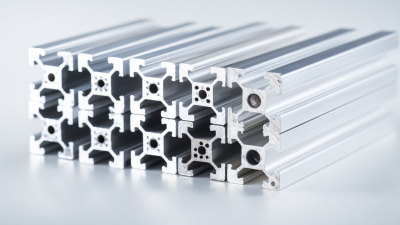
Aluminum corner extrusion profiles are shaped sections with a fixed angle, commonly 90 degrees. Manufacturers create them by forcing heated aluminum through a precision die. This process forms consistent legs, edges, and channels. The profile can join panels, protect exposed corners, or reinforce lightweight frames. Typical applications include machine guards, retail fixtures, window systems, and modular workstations.

The material offers a useful balance between strength, weight, and corrosion resistance. The U.S. Geological Survey reported approximately 70 million metric tons of primary aluminum production worldwide in 2023. This scale supports broad material availability and established processing expertise. The International Aluminium Institute also reports that recycling aluminum requires about 5% of the energy used for primary production. That figure makes recycled-content profiles worth considering. However, aluminum is not automatically the best choice. High loads, impact, heat, and galvanic contact require engineering review. A thin corner may look strong but still deform under repeated stress.

Tips: Check wall thickness, angle accuracy, alloy, and surface finish before ordering. Match the profile to the load path, not only the visible corner. Ask for dimensional tolerances and recycled-content documentation. Small errors matter. During installation, isolate aluminum from dissimilar metals when moisture is present. A careful fit often prevents rattling, staining, and premature wear.
How Are Aluminum Corner Extrusion Profiles Designed and Manufactured?

Why Choose Aluminum Corner Extrusion Profiles?

How Are Aluminum Corner Extrusion Profiles Designed and Manufactured?

Aluminum corner extrusion profiles begin with a functional question: what must the joint carry? Designers define load, corner angle, wall thickness, and installation space before drawing the die. Common alloys such as 6063 offer clean surfaces and reliable formability. Alloy 6061 provides higher strength, but it can require tighter process control.

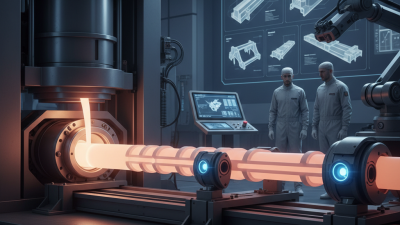
The die contains a shaped opening that forms the profile in one continuous push. Billets are commonly heated near 400–500°C before extrusion. Hydraulic pressure forces softened aluminum through the steel die. The emerging section is cooled, stretched, cut, and aged. EN 755 tolerances help engineers control dimensions, yet thin corners can still distort during cooling.

Small details matter.

A 2–3 mm internal radius can reduce stress concentration and improve metal flow. Designers also check screw channels, drainage paths, anodizing allowance, and contact with adjoining panels. A perfect drawing can fail during assembly. Shop-floor trials often expose this gap.

The International Aluminium Institute recorded about 70.6 million tonnes of primary aluminum production in 2023. That scale increases pressure to design efficiently and reduce waste. The International Energy Agency reports that recycled aluminum requires roughly 5% of the energy used for primary production. Scrap collection, alloy separation, and remelting therefore influence responsible profile manufacturing.

A useful design review should compare strength, weight, surface quality, and recyclability. No single profile wins every application. Sometimes, a slightly thicker wall prevents expensive rework.

Why Choose Aluminum Corner Extrusion Profiles? - How Are Aluminum Corner Extrusion Profiles Designed and Manufactured?

Data Dimension Typical Specification or Value Design and Manufacturing Significance Practical Benefit
Common Alloy 6063 aluminum alloy 6063 is widely used for architectural and general-purpose extrusions because it offers good extrudability, surface finish, and corrosion resistance. Supports detailed corner geometries and produces a smooth surface suitable for anodizing or powder coating.
Higher-Strength Option 6061 aluminum alloy 6061 generally provides higher mechanical strength than 6063, although it is less suitable for very complex extrusion shapes. Useful when the corner profile must carry greater structural loads or resist impact.
Typical Temper T5 or T6 T5 is commonly achieved through cooling after extrusion followed by artificial aging. T6 includes solution heat treatment and artificial aging. Provides a controlled balance between strength, dimensional stability, and manufacturability.
Material Density Approximately 2.70 g/cm³ Aluminum has a much lower density than steel while retaining useful stiffness and strength for many framing applications. Reduces handling weight, shipping weight, and installation effort.
Melting Range Approximately 615–655°C for common 6xxx-series alloys Aluminum billets are heated before being forced through a precision die. The exact temperature is controlled according to alloy and billet condition. Enables efficient production of long, continuous profiles with consistent cross-sections.
Profile Geometry Equal-leg, unequal-leg, T-slot, channel, and custom corner sections Leg length, wall thickness, internal radius, external radius, and functional grooves are designed according to assembly and load requirements. Allows the same extrusion concept to serve structural frames, trims, enclosures, partitions, and protective edges.
Common Leg Dimensions Approximately 10–100 mm per leg for many general-purpose profiles Leg dimensions are selected according to span, fastening method, clearance, and required visual appearance. Provides flexibility for both compact assemblies and larger framing systems.
Typical Wall Thickness Approximately 1.0–5.0 mm Wall thickness depends on alloy, profile complexity, die design, required stiffness, and extrusion press capability. Balances weight, material consumption, rigidity, and resistance to denting.
Internal Corner Radius Commonly about 0.5–3.0 mm, depending on wall thickness and die design A controlled internal radius improves metal flow through the die and reduces stress concentration in the finished profile. Improves extrusion stability and reduces the risk of cracking or incomplete filling at the corner.
Extrusion Direction Longitudinal, continuous profile production A heated aluminum billet is pushed through a shaped steel die, producing a constant cross-section along the extrusion length. Creates repeatable profiles that can be cut to different project lengths.
Standard Cut Lengths Often supplied in 3–6 m lengths before secondary cutting Commercial extrusion lengths are cut according to press capacity, transport requirements, and customer specifications. Supports efficient production while allowing customized final dimensions.
Length Tolerance Commonly around ±1–3 mm for cut lengths, subject to length and cutting method Cutting tolerances depend on saw accuracy, profile size, batch control, and the specified standard or drawing. Helps maintain fit-up accuracy during assembly and installation.
Dimensional Tolerance Typically controlled according to applicable aluminum extrusion standards, such as EN 755 or ASTM B221 Tolerances vary by dimension, wall thickness, alloy, temper, and profile complexity rather than using one value for every feature. Provides a recognized basis for inspection and design acceptance.
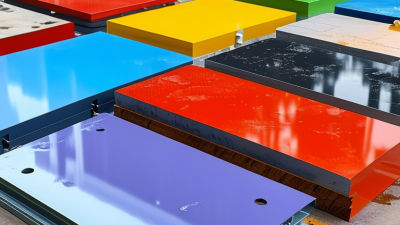
Surface Finish Options Mill finish, anodized finish, powder-coated finish, or liquid-painted finish Surface treatment is selected after extrusion, straightening, cutting, and inspection according to appearance and service conditions. Improves appearance, corrosion resistance, cleanability, and compatibility with surrounding components.
Anodizing Thickness Common architectural ranges include approximately 10–25 μm Anodizing forms a controlled aluminum oxide layer. The required thickness depends on indoor or outdoor exposure and applicable specifications. Creates a durable metallic appearance and improves resistance to surface wear and corrosion.
Powder-Coating Thickness Commonly approximately 60–120 μm, depending on specification and application Powder is electrostatically applied and cured in an oven. Coating thickness must be controlled to avoid poor coverage or dimensional interference. Offers a broad choice of colors and a protective finish for architectural and industrial applications.
Post-Extrusion Operations Stretch straightening, aging, cutting, drilling, punching, milling, deburring, and surface treatment Secondary operations convert the continuous extrusion into installation-ready components with specified holes, lengths, and edge conditions. Reduces on-site processing and improves assembly consistency.
Corrosion Resistance Good resistance in many atmospheric environments; enhanced by anodizing or coating Aluminum naturally forms a thin oxide film. Exposure to salt, chemicals, or dissimilar metals should be evaluated during design. Supports long service life in indoor, architectural, and selected outdoor applications.
Thermal Conductivity Approximately 200 W/(m·K) for common 6xxx-series aluminum alloys Aluminum transfers heat efficiently, so thermal bridges should be considered in building envelope and temperature-sensitive designs. Can assist heat dissipation but may require thermal breaks where insulation is important.
Recyclability Aluminum can be recycled repeatedly without losing its basic material properties Scrap from cutting and manufacturing can be collected and returned to the aluminum recycling stream. Helps reduce material waste and supports more sustainable product life cycles.
Primary Design Checks Load, span, deflection, wall thickness, corner radius, fastening method, thermal movement, and surface environment A successful profile is designed by considering both extrusion feasibility and its final service conditions. Improves structural reliability, production yield, installation fit, and long-term performance.

Note: Values are representative engineering ranges for common aluminum corner extrusion applications. Final dimensions, tolerances, alloy, temper, finish, and inspection requirements should be confirmed against the project drawing and applicable standards.

What Advantages Do Aluminum Corner Extrusion Profiles Offer?

Why Choose Aluminum Corner Extrusion Profiles?

What Advantages Do Aluminum Corner Extrusion Profiles Offer?

Aluminum corner extrusion profiles provide clean, accurate edges for frames, cabinets, partitions, and protective enclosures. Their L-shaped structure joins two surfaces neatly, reducing exposed gaps and uneven finishing. Extrusion manufacturing creates consistent dimensions along long lengths. This helps installers cut, align, and assemble components with fewer adjustments.

The material is lightweight, yet strong enough for many indoor and light industrial applications. It also resists rust, making it suitable for humid workshops, kitchens, and covered outdoor areas. A smooth anodized or powder-coated surface can improve appearance and everyday durability. Maintenance is simple. Wipe it clean.

In practical installation work, the biggest advantage is flexibility. Profiles can be drilled, cut, bonded, or combined with fasteners. They also support modular designs that may need future changes. However, aluminum is not automatically the best choice. Poor alloy selection, weak fasteners, or inaccurate cutting can cause movement at the joint. Thermal expansion also deserves attention in long installations.

Measure twice. Cut once.

Engineers should check wall thickness, load requirements, corner geometry, and surface conditions before specifying a profile. Rounded edges may improve safety, while thicker sections can provide better impact resistance. Still, thicker is not always better. It can increase weight, cost, and machining effort without improving the actual design. Reliable results come from matching the profile to its working environment, not choosing the largest section available.

Where Are Aluminum Corner Extrusion Profiles Commonly Used?

Why Choose Aluminum Corner Extrusion Profiles?

Aluminum corner extrusion profiles are common in places requiring clean edges, stable joints, and moderate weight. Their L-shaped design protects exposed corners while supporting simple structural connections. They are frequently used in shop interiors, office partitions, display frames, and lightweight enclosures. The material resists rust better than untreated steel in many indoor and outdoor conditions. It also cuts and drills with ordinary workshop tools.

They fit naturally around cabinets, shelving units, doors, and machine guards. In construction, installers use them to reinforce panel corners and create tidy transitions between surfaces. Workshop teams also use aluminum angles for equipment frames, inspection covers, and protective barriers. The smooth profile can hide uneven panel edges. That small detail improves both appearance and safety.

Not every corner profile suits every project. A thin section may bend under repeated impact or heavy loads. Check wall thickness, alloy strength, corner radius, and fastening method before installation. During fitting, accurate measuring matters because small gaps can collect dust or moisture. An anodized or powder-coated finish may improve surface durability, but it does not replace proper drainage. In practice, the most attractive profile is not always the strongest choice. This is where design decisions sometimes need another review.

How Should Aluminum Corner Extrusion Profiles Be Selected and Installed?

Why Choose Aluminum Corner Extrusion Profiles?

How Should Aluminum Corner Extrusion Profiles Be Selected and Installed?

Aluminum corner extrusion profiles offer clean edges, low weight, and dependable corrosion resistance. Selection should begin with function, not appearance. A 6063 alloy often suits decorative trims and architectural frames because it extrudes smoothly and accepts attractive finishes. A 6061 alloy may perform better where higher strength matters. Check wall thickness, leg length, corner angle, and expected loads. The ASTM B221 specification is a useful reference for extruded aluminum profiles. It helps verify dimensions and mechanical requirements. Do not assume a thicker profile is always better.

Installation quality depends on preparation. Measure the actual opening, because drawings can hide uneven walls. Cut with a fine-tooth blade, then remove burrs carefully. Dry-fit each section before drilling. Leave movement space where temperature changes are significant. Aluminum expands and contracts more than many surrounding materials. Use compatible fasteners and isolate aluminum from dissimilar metals to reduce galvanic corrosion. The International Aluminium Institute reported about 70.6 million tonnes of primary aluminum production in 2023. Its lifecycle data also states that recycled aluminum can require up to 95% less energy than primary metal. Material choice affects both performance and environmental impact.

Tips: Measure twice. Dry-fit everything. Use a level on long runs. Seal only after alignment is confirmed. I still see installations fail because installers trust a perfect drawing over an imperfect wall. That small mistake is easy to overlook.

Why Choose Aluminum Corner Extrusion Profiles?

How Should Aluminum Corner Extrusion Profiles Be Selected and Installed?

The chart compares typical minimum tensile strength values for commonly used aluminum extrusion alloys and tempers. 6063-T5 is widely selected for architectural corner trims and light-duty frames because it offers good extrudability and surface finish. 6063-T6 provides higher strength, while 6061-T6 is generally chosen for more demanding structural applications.

During selection, confirm the required load, corner dimensions, wall thickness, alloy, temper, finish, and corrosion conditions. For installation, cut profiles accurately, deburr all edges, align the two legs before fastening, allow for thermal movement, and use corrosion-compatible screws or adhesives.