What is Aluminum Extrusion Tube Profiles and How to Choose?
In the world of manufacturing, "Aluminum Extrusion Tube Profiles" play a crucial role. Experts like John Mitchell, a leading authority in metal fabrication, once stated, "The choice of the right profile can significantly impact both performance and cost." This emphasizes the importance of selecting the correct aluminum extrusion for specific applications.
Aluminum extrusion offers unique advantages such as lightweight strength and versatility. These features make it suitable for numerous industries, from automotive to aerospace. However, not all extrusion profiles serve the same purpose. Understanding the properties and applications is key to making informed decisions.
When evaluating options, one should consider factors like weight, strength, and thermal conductivity. Sometimes, even small details can lead to major project success or failure. Manufacturers often overlook specific requirements, leading to regrets later on. In this fast-evolving industry, staying informed is essential for optimal choices in aluminum extrusion tube profiles.
Definition of Aluminum Extrusion Tube Profiles
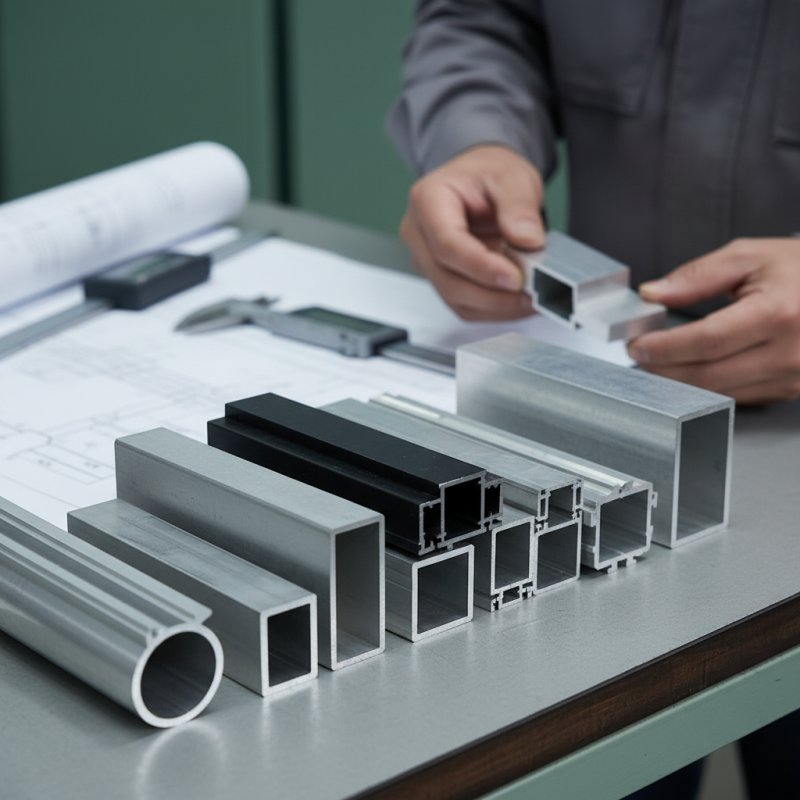
Aluminum extrusion tube profiles are essential in various industries, including construction, automotive, and aerospace. These profiles are created by forcing aluminum alloy through a die, shaping it into desired forms. This process maintains the material's durability and lightweight properties, making it a preferred choice for many applications. According to the Aluminum Association, the global market for aluminum extrusion is projected to reach $134 billion by 2027, reflecting the material's growing popularity.
Choosing the right aluminum extrusion tube profile involves understanding its properties and intended use. The profiles can be customized in various shapes and sizes, offering flexibility for designers. For instance, circular tubes are commonly used in furniture and architectural structures, while rectangular profiles serve well in automotive frames. The tensile strength of aluminum can vary significantly, averaging around 70-700 MPa depending on the alloy. This variance necessitates careful consideration based on application requirements.
Additionally, sustainability plays a crucial role in the aluminum industry. Over 75% of aluminum produced is still in use today, showcasing its recyclability. However, improper recycling methods can lead to significant waste. Thus, selecting profiles with sustainable manufacturing processes is critical. Understanding these elements not only aids in making informed choices but also highlights areas for improvement in aluminum usage.
Key Benefits of Using Aluminum Extrusion Tubes
Aluminum extrusion tubes are widely used in various industries due to their versatility and strength. The lightweight nature of aluminum contributes to energy efficiency in applications such as automotive and aerospace. According to a recent industry report,
the global aluminum extrusion market is expected to reach $70 billion by 2026, highlighting its importance.
One key benefit of aluminum extrusion tubes is their resistance to corrosion. Unlike steel, aluminum forms a protective oxide layer when exposed to air. This property enhances the longevity of products made from aluminum, reducing maintenance costs. Furthermore, these tubes can be easily customized in shape and size, offering flexibility for designers.
Customization can meet specific industrial needs, providing efficient solutions.
Tip: When selecting aluminum extrusion tubes, consider the wall thickness. A thicker wall can withstand higher pressure, while a thinner wall can reduce weight and cost.
Another benefit is their excellent thermal conductivity. Aluminum extrusion tubes can dissipate heat effectively, making them ideal for applications where heat management is critical.
Studies show that aluminum tubes can operate efficiently in temperatures up to 120°C without significant deformation. This characteristic is crucial in industrial settings where overheating can lead to equipment failure.
Tip: Evaluate the alloy used in the extrusion process. Different alloys offer varying strength and machinability, impacting the final product's performance.
Factors to Consider When Choosing Aluminum Extrusion Profiles
When selecting aluminum extrusion profiles, several crucial factors come into play. The first aspect to consider is the intended application. Different projects have unique requirements for strength, flexibility, and durability. A lighter profile may suffice for low-stress applications. Conversely, heavy-duty applications may demand thicker walls and additional reinforcements. Evaluating the specific needs of your project is essential in making the right choice.
Next, consider the finish of the aluminum profile. Anodized surfaces are popular for their corrosion resistance and aesthetic appeal. However, they can increase production costs. Basic mill finishes offer a more cost-effective option but may not provide the same level of protection. Don’t overlook the importance of surface treatment, as it can greatly affect the longevity of your aluminum profiles.
Finally, it’s vital to plan for future needs. Will the profile accommodate modifications or expansions? Often, projects evolve, and having flexibility in your design can save time and resources down the line. Recognizing these considerations will guide you in making a more informed decision that aligns with both current and future requirements.
Common Applications for Aluminum Extrusion Tube Profiles
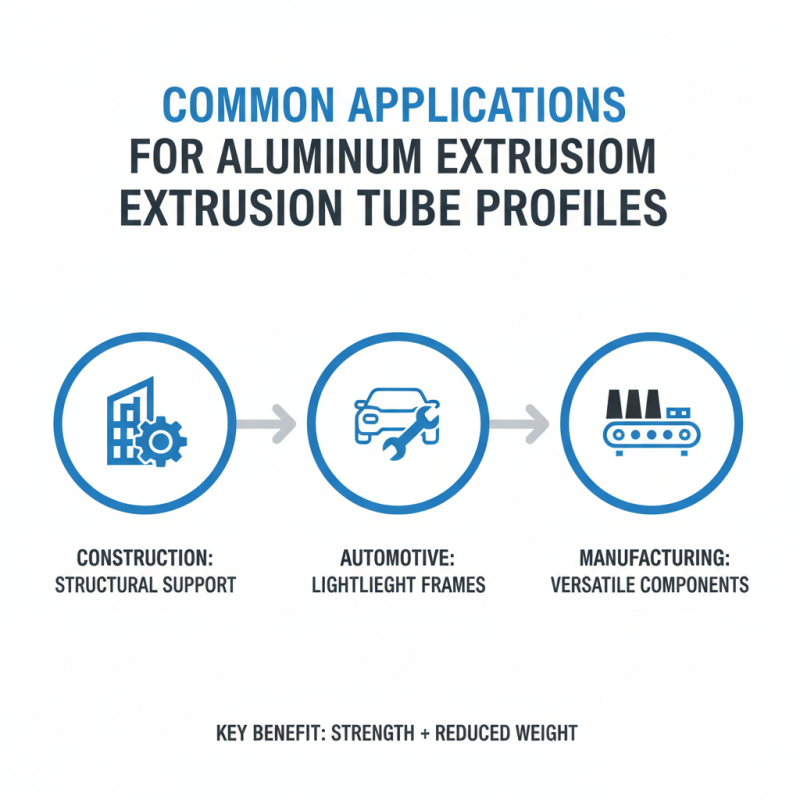
Aluminum extrusion tube profiles are widely used across various industries. Their versatility makes them suitable for applications in construction, manufacturing, and automotive sectors. Architects often use these profiles for structural support in building projects. Their lightweight nature reduces the overall weight of structures while maintaining strength.
In manufacturing, these tube profiles are used to create equipment frames. They provide both durability and adaptability. Engineers appreciate how easily they can be customized for specific needs. In automotive applications, aluminum extrusions contribute to fuel efficiency by minimizing overall vehicle weight.
While aluminum tubes have many benefits, they do come with challenges. Designing the correct profile requires careful consideration of the specific application. Some profiles may not perform well under certain environmental conditions. Reflecting on these factors is crucial for achieving optimal performance. A thorough understanding of the requirements is necessary for effective use.
Comparison of Different Aluminum Alloys for Extrusion Tubes
Aluminum extrusion tubes are widely used across industries due to their lightweight and durability. Choosing the right alloy can significantly impact performance. Among the various aluminum alloys, 6061 and 6063 are popular for extrusion. According to industry reports, 6061 offers higher strength, making it suitable for structural applications. Conversely, 6063 is often favored for architectural uses thanks to its excellent finish and formability.
In structural applications, the mechanical properties of an alloy are critical. The tensile strength of 6061 can reach 310 MPa, while 6063 is around 240 MPa. This difference is significant for projects that demand robustness. However, 6063 provides better corrosion resistance, which can be vital in outdoor applications. Consider the environment in which the tubes will be used before selecting the alloy.
**Tips**: Always assess the tube's intended use. Look for corrosion resistance if you're in coastal areas. Also, think about aesthetic needs; 6063 can result in better finishes. Remember that proper alloy selection does not only rely on strength or corrosion resistance but also on the specific demands of your application. This reflection can enhance both functionality and longevity in your projects.
Comparison of Different Aluminum Alloys for Extrusion Tubes
This chart illustrates the performance characteristics of various aluminum alloys commonly used for extrusion tubes. Each alloy is compared based on strength, weight, and corrosion resistance.









 wechat